

In lieu of Repronews, I offer you a dump of population-related infographic, also for my own future reference. After all, a picture is worth a thousand words, or at least is more directly evocative than any text.
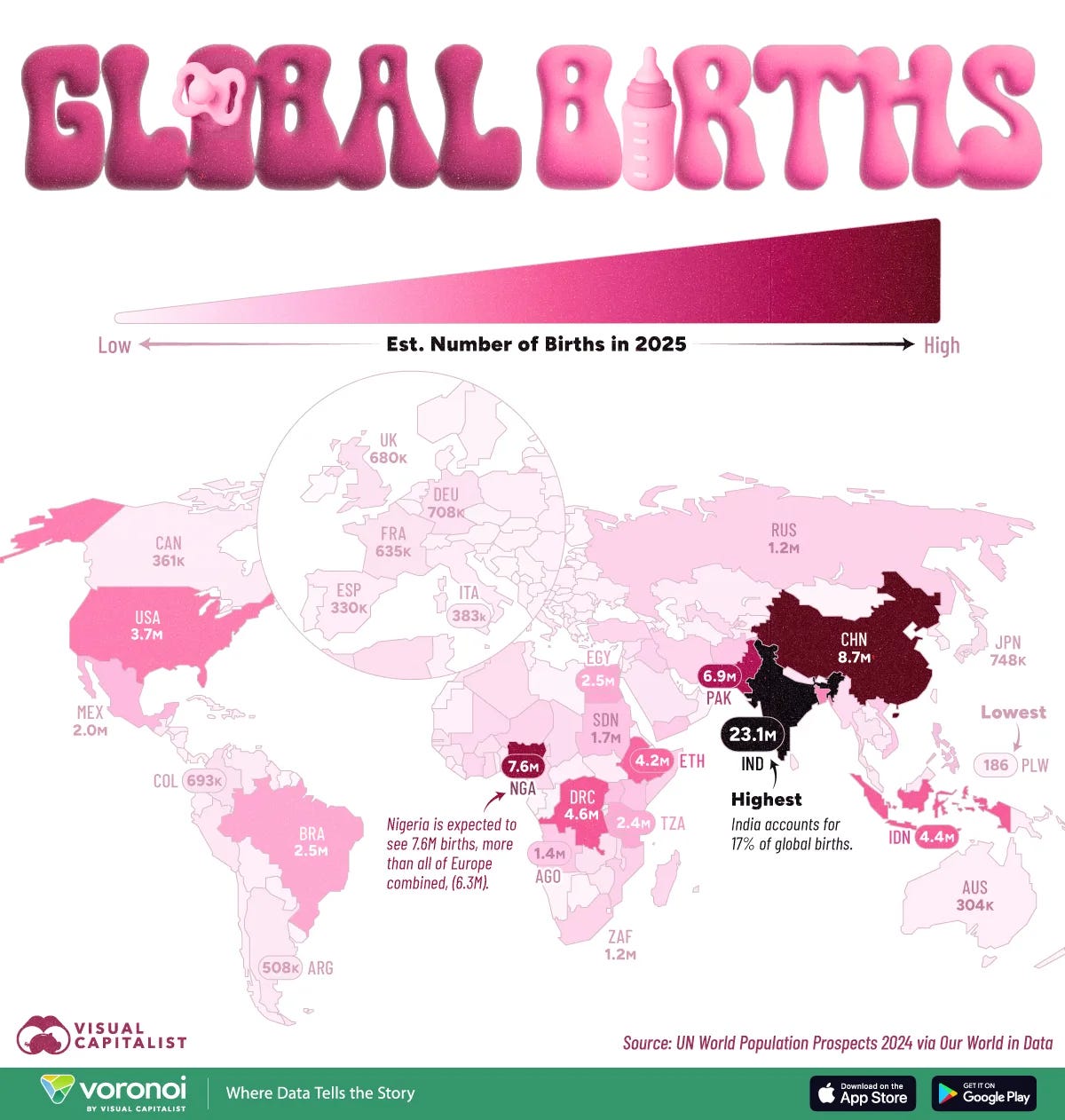
Baby births by country worldwide: Have you updated your priors? Do you understand that India has almost three times as many births as China? That Pakistan has almost 10 times more births than Japan? That Nigeria has more births than all of Europe (including Russia) combined? The future belongs, in the first instance, to those who show up. I have discovered during my studies that the demographic sustainability of societies—which was of keen interest ancient political philosophers like Aristotle—is of essentially no interest to virtually all the great contemporary political philosophers. A curious thing, that.
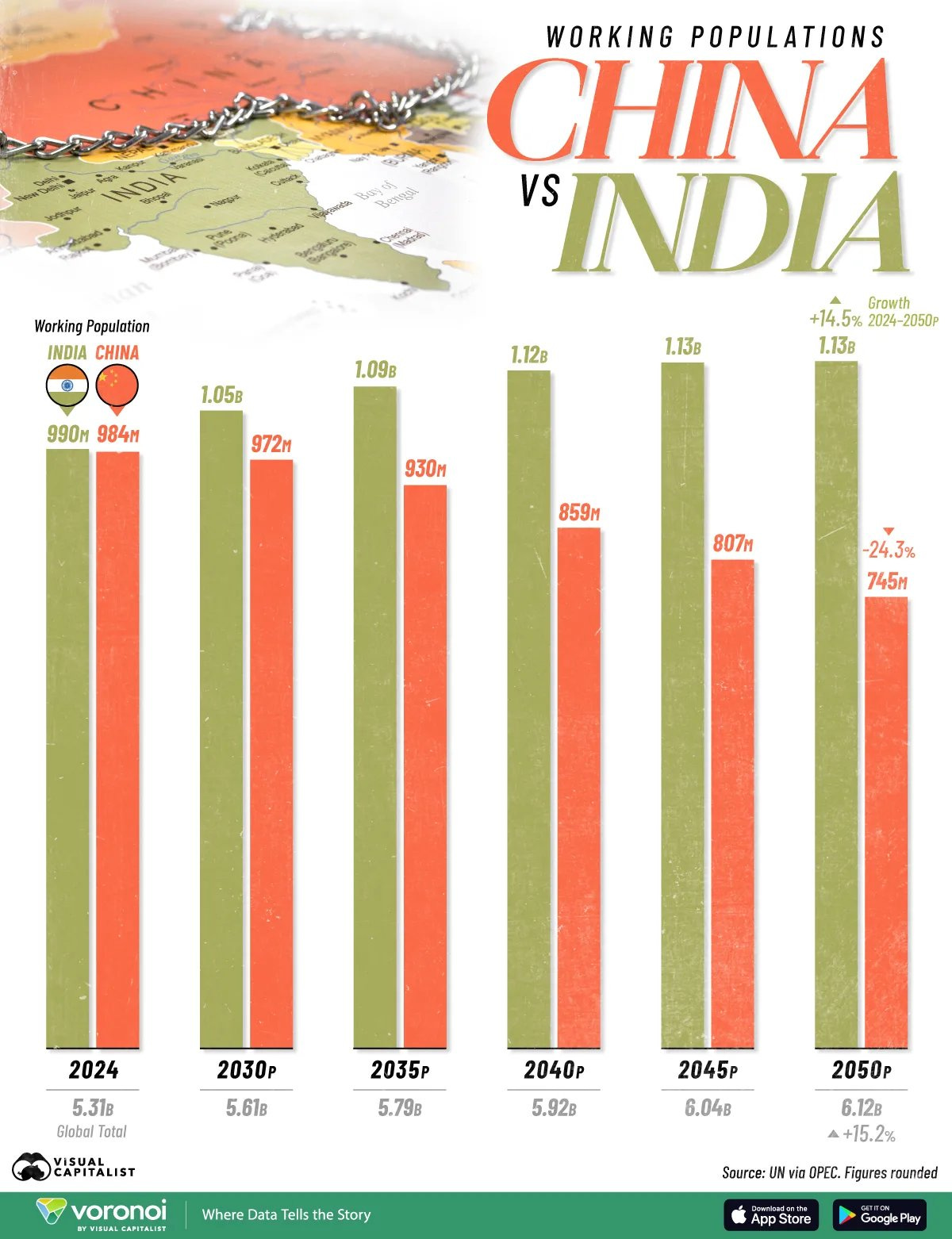
China vs. India working populations: The collapse of China’s working-age population is well underway. China must sustain almost 25% productivity growth over the next 25 years just to make up for demographic shrinkage. The Chinese Communists’ pronatalist policy efforts—pivoting sharply away from the One-Child Policy—have so far yielded no discernible results. Admittedly, China still has significant scope for “catch-up” growth because per capita wealth still isn’t that high. In addition, I think the Chinese public pension system is ungenerous, which may prevent rising pension costs from reaching catastrophic Franco-Italian levels. Downside risks to economic growth include China’s relative closure under Xi Jinping, the politicization of large parts of the economy, and their authoritarian system’s tendency to hide rather than address emerging problems. It is striking that Chinese economic growth in recent years has only slightly above U.S. growth. India will benefit from continuing demographic growth for some decades, though it remains an open question whether the nation’s scale can be translated into power-projection abroad (Brazil offers the best precedent for answering in the negative).
Disconnected: One of my pet theories is that access to smartphones craters fertility even in less developed countries. That might explain why very high fertility is only persisting in Pakistan, Afghanistan, and most of Sub-Saharan Africa. I can’t think of anything else that would explain the simultaneous fertility collapse across Latin America, South and Southeast Asia, and much of North Africa and the Middle-East in recent years.

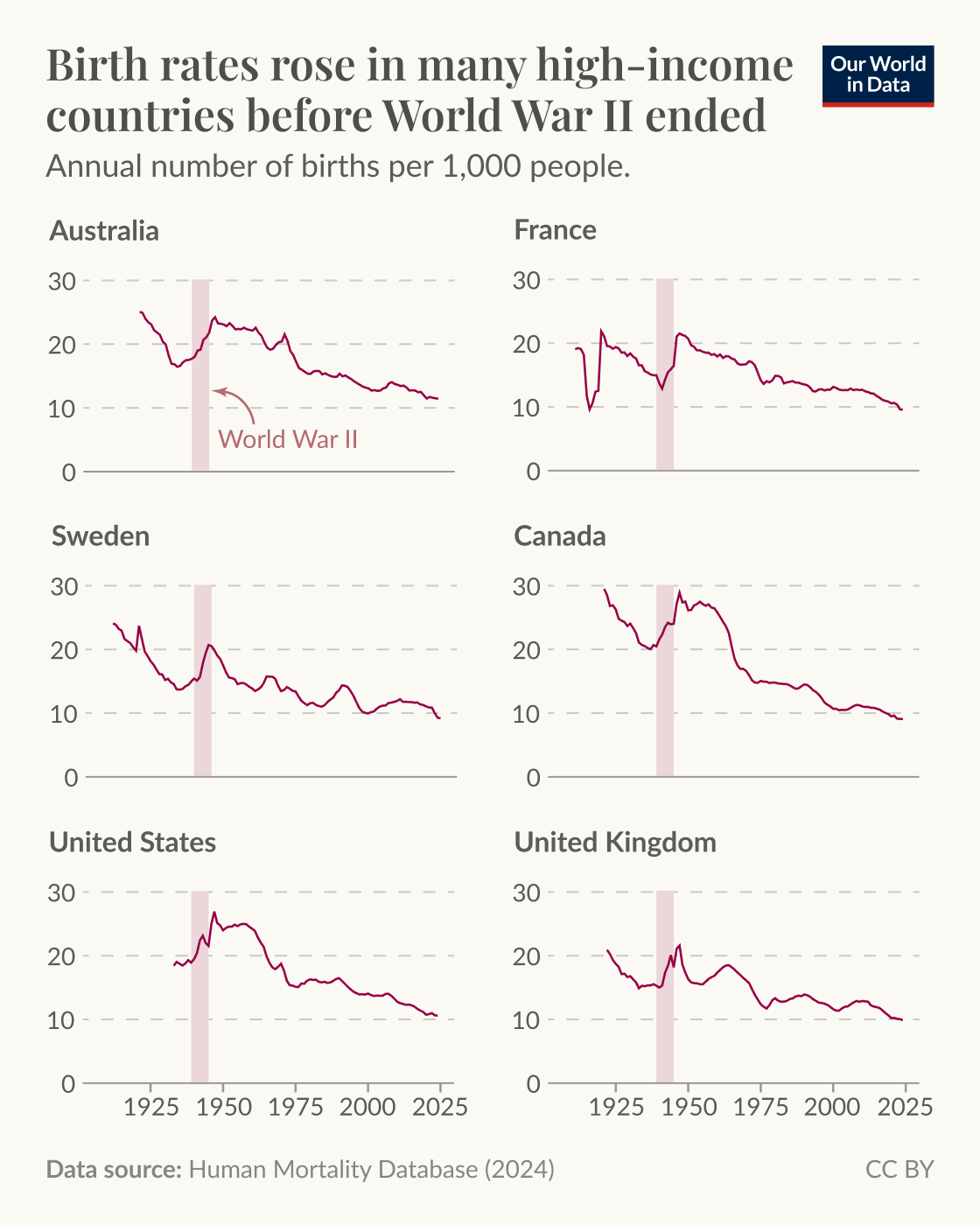
WW2 baby boom: Why did the Baby Boom start before the end of World War II? Beat me. In France, it even started under German occupation and the Vichy Regime. The latter had some pronatalist policies that doesn’t seem enough to explain.
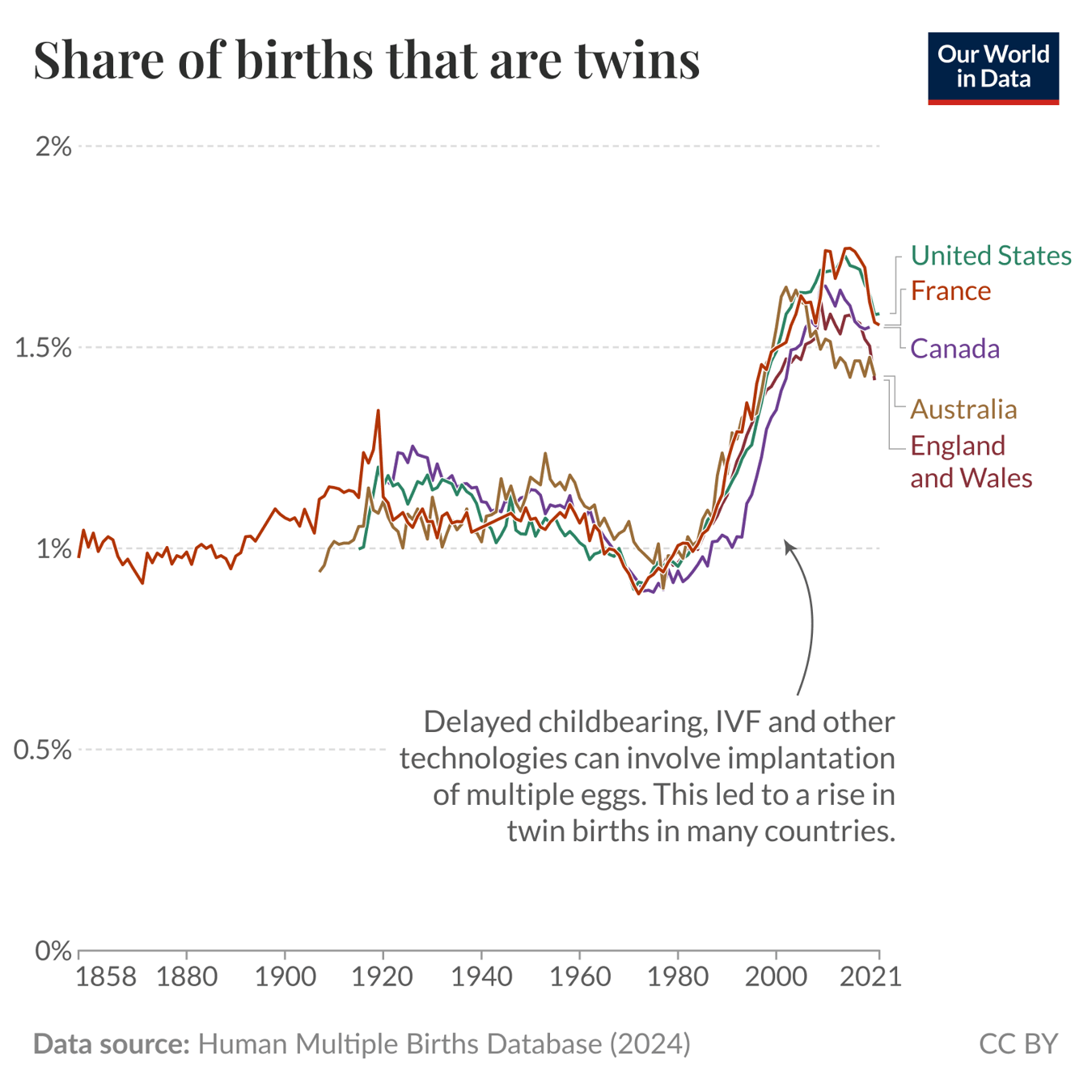
Twins: IVF leads to more twins as more eggs are implanted to increase the chance of successful pregnancy. The numbers seems to be going down as single embryo transfer—which reduces the chance of birth defects—becomes the norm.
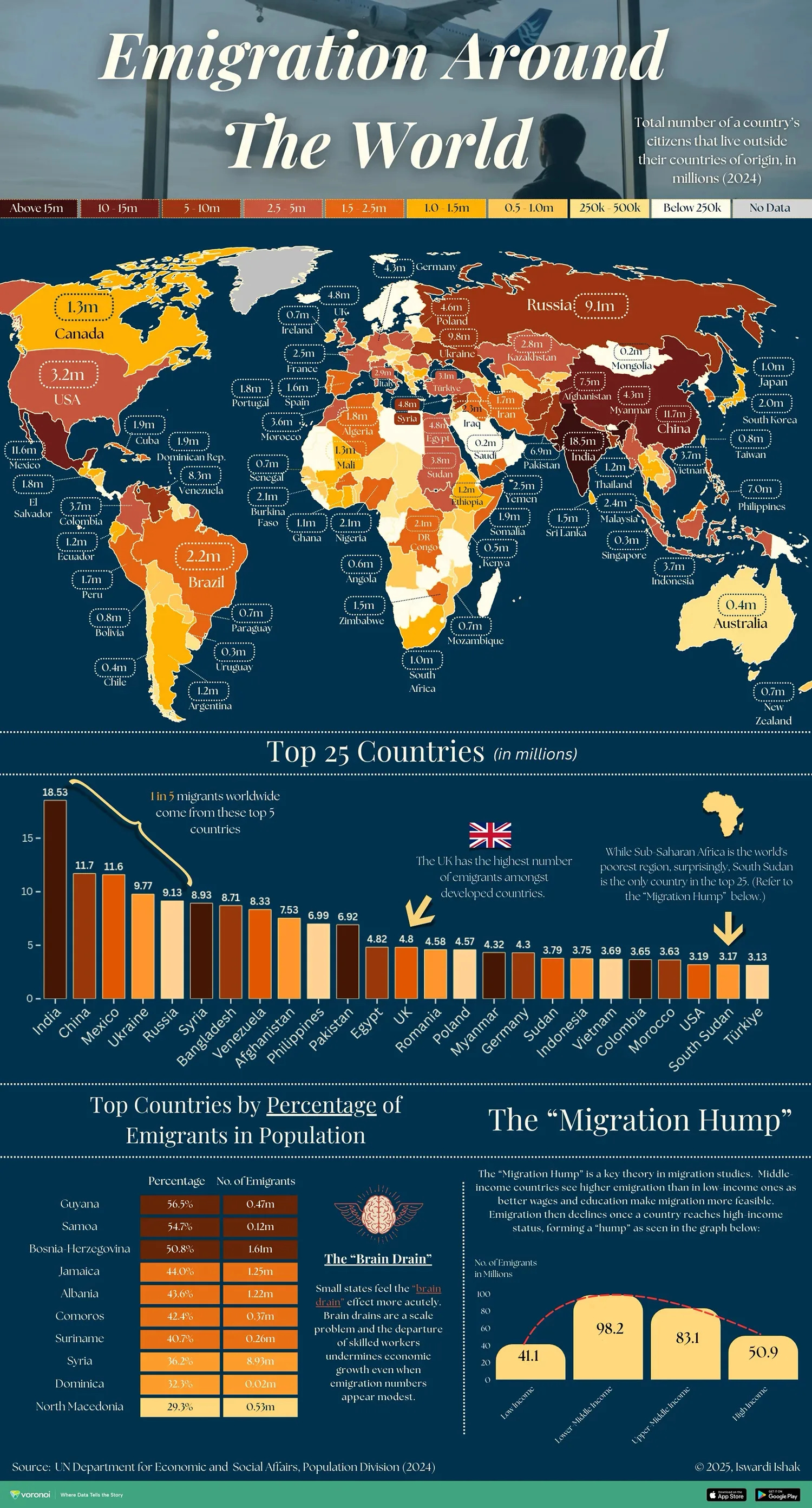
Emigrants: Noteworthy that lower-middle countries—not the poorest—tend to have the most emigrants; that Ukraine, Syria, and Venezuela have among the highest absolute numbers of emigrants; and the significant Indian and Chinese diasporas are likely to continue to have impact.
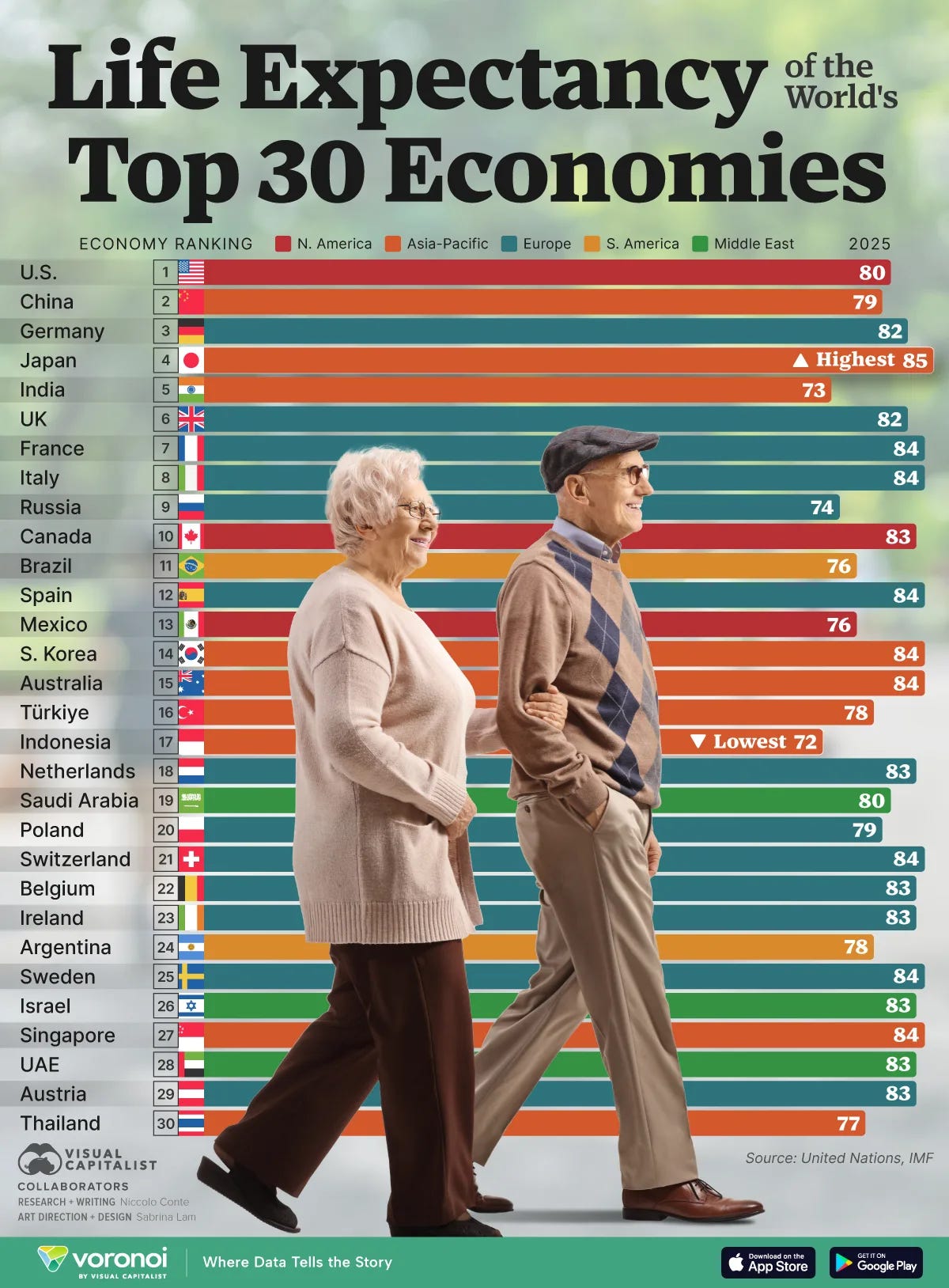
Life expectancy: Past pretty middling level of national wealth, life expectancy largely decouples from the economy.
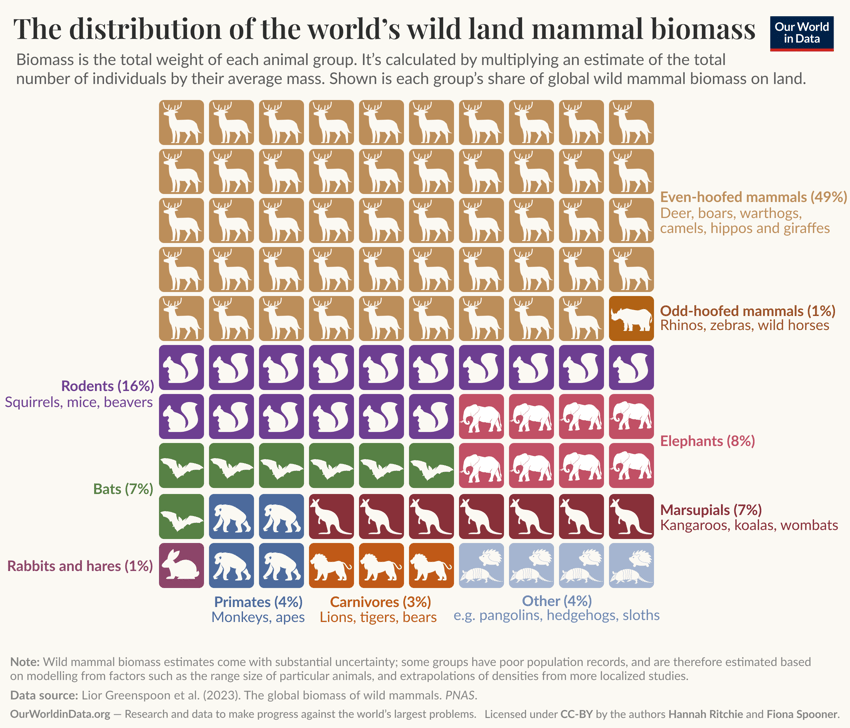
Wild land mammals
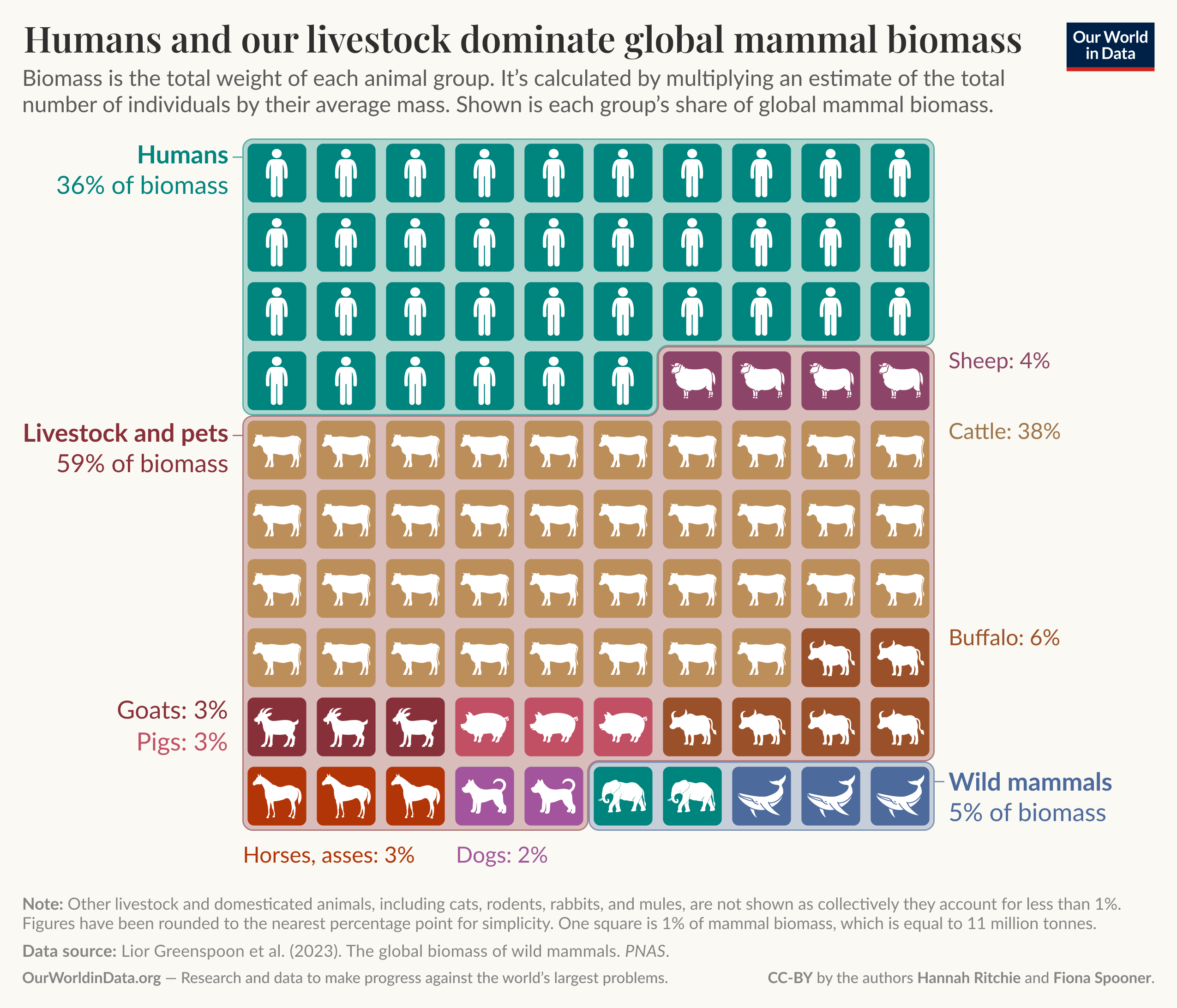
Humans and our livestock make up 95% of mammal biomass: The above fits in just two squares below. Mammalian life is essentially made up of self-reproducing humans and the industrialized rearing and processing of various life-forms for our consumption. And a few pets. Very Samsaric.
Congratulations on the cellphone/birthrate relationship. I'm leaning towards a Tielhard de Chardin-style feminine noosphere where they reached a consensus that we have more people on the planet than can be indefinitely sustained.
A niggle about "Downside risks include China’s relative closure under Xi Jinping, the politicization of large parts of the economy, and their authoritarian system’s tendency to hide rather than address emerging problems. It is striking that Chinese economic growth in recent years has only slightly above U.S. growth”. Though oft-repeated by our media, such allegations don't withstand scrutiny.
China runs the most transparent government on earth as we see from the scrutiny that Five Year Plans allow, which account for 99% of the government's responsibilities–and it's completely transparent. And we could use a little 'politicization of the economy' ourselves right now, before it is dashed to pieces on the rocks of inequity.
China's system, in real life, is far less authoritarian than ours. Incomparably so. Xi Jinping has none of our president's executive powers. He's the chairman of two important committees and gets a vote like everyone else. He's not even an executive chairman.
The idea that China hides rather than address emerging problems hardly matches the reality of the last 75 years and the biggest land reform in history, the biggest women's liberation in history, the Great Leap Forward, the Cultural Revolution, Reform and Opening, and poverty elimination.
And as to Chinese economic growth in recent years being only slightly above U.S. growth? Again, the evidence, like our flatlined vs their vertical growth in electricity generation, along with rising vs falling life expectancies, suggest otherwise. I put China's 2025 GDP growth at $2 trillion (5% of $41 trillion 2024 GDP) and America's at $700 billion. And China's productive (wartime) economy is at least 3x bigger than ours.