In lieu of Repronews—I’m a busy man!—you may have a look at the following dump of interesting infographics on the world’s demographic trends. Most from the great people at Visual Capitalist. tl/dr:
per capita progress is real;
Europe’s decline is likely permanent;
and China is probably headed for stagnation sooner than we think.
Progress: We take it for granted
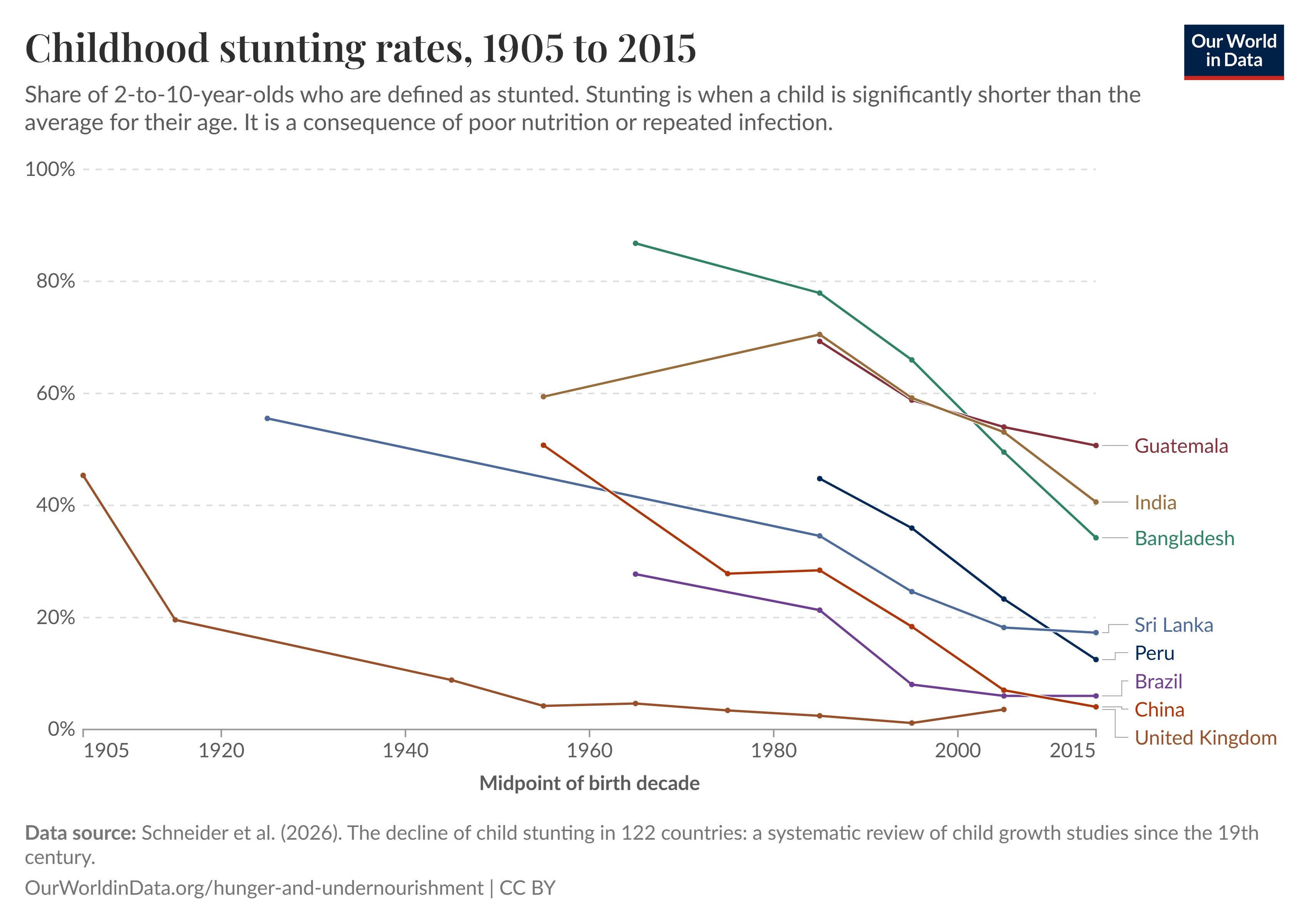
Let’s start with some good news. Antinatalists like Paul Ehrlich have been warning for decades that high birth rates and overpopulation will have catastrophic consequences such as recurring famines and environmental collapse. At least on the food front, human ingenuity has decisively beaten the Malthusian mindset. Childhood stunting—children being shorter than normal, usually due to food insecurity—used to be widespread, including in richer countries like Great Britain. Stunting rates are collapsing across the world, including in poorer high-fertility countries.
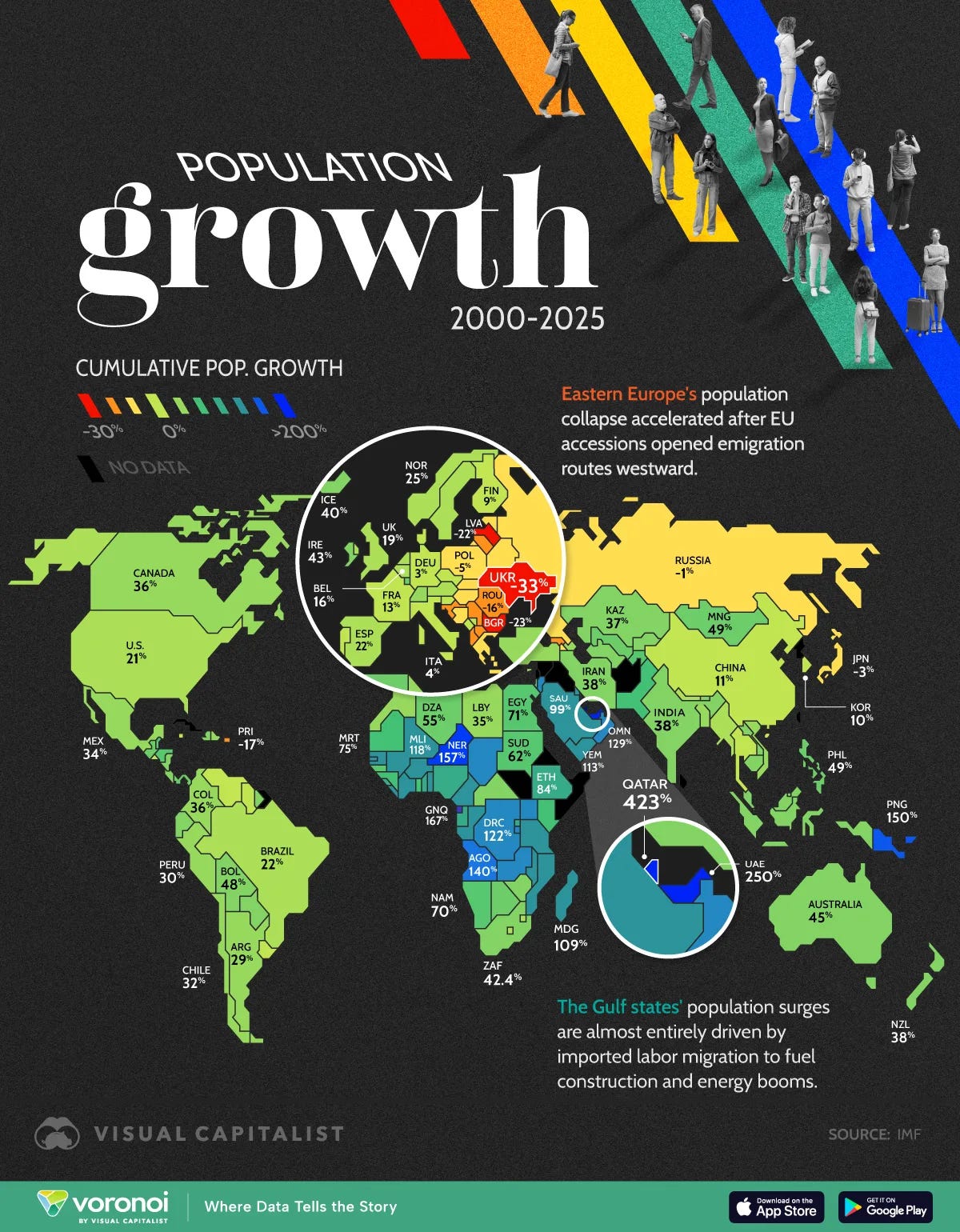
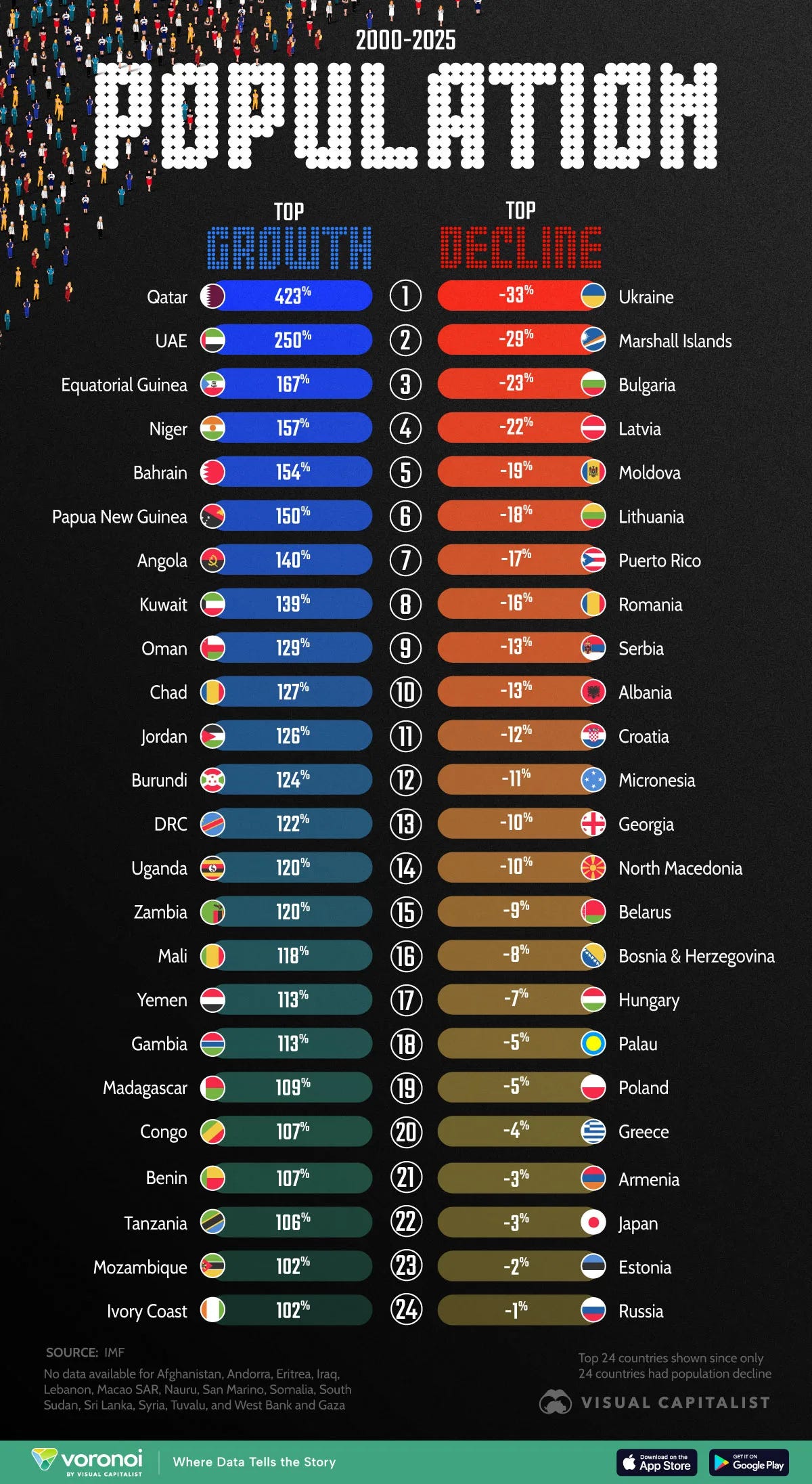
Update your mental map!: Population change since 2000
Different ways of visualizing change in population size since 2000. Eastern Europe has seen population decline. Elsewhere, most regions have seen growth, especially fecund sub-Saharan Africa and migration-fueled Arab Gulf states.
India’s population has grown by more than the entire population of the U.S.A. China, Nigeria, and Pakistan have each added the equivalent of a Japan. Indonesia of a Germany. The U.S. and D.R. Congo each of an Italy.
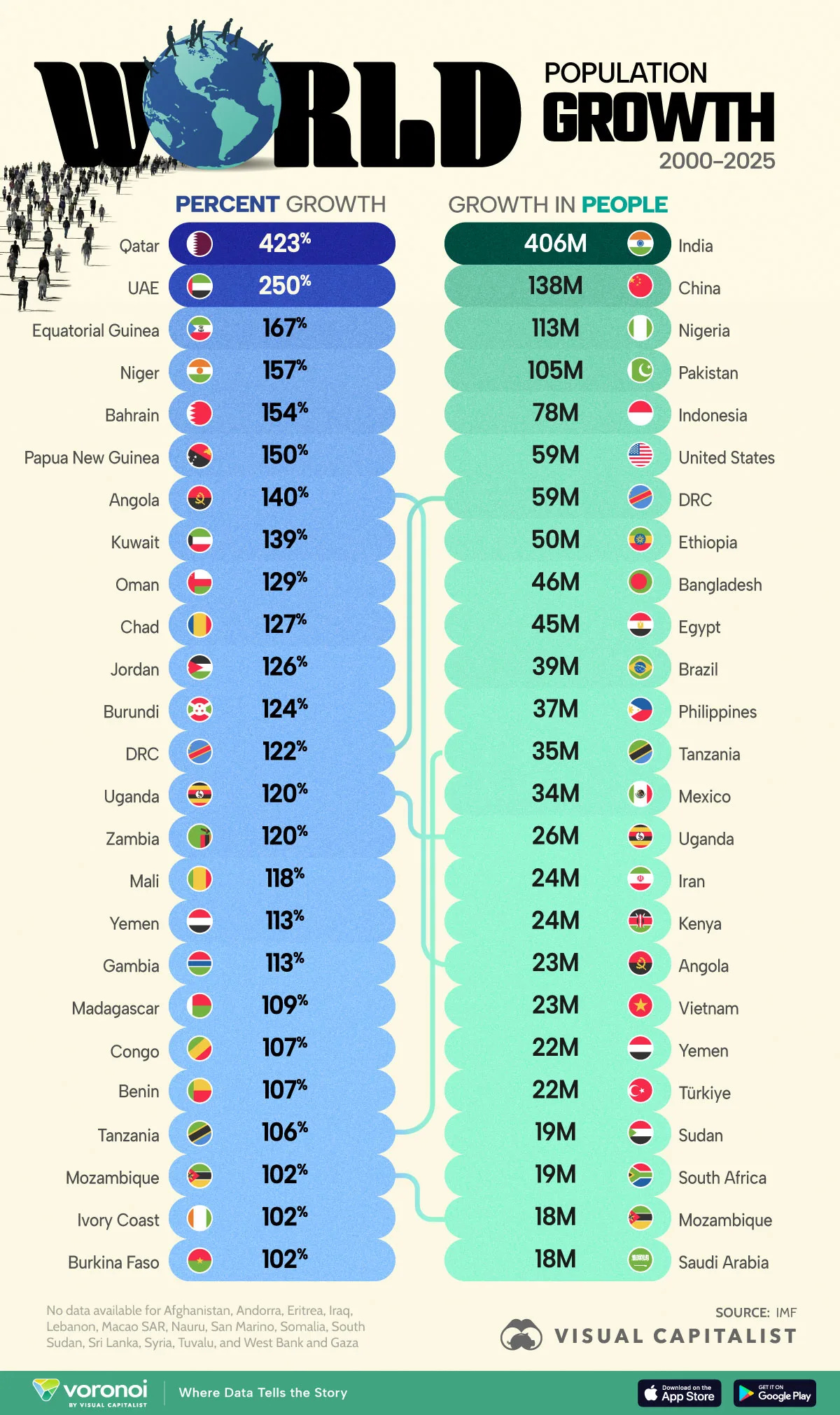
In the Gulf states, population growth is driven by migration, in sub-Saharan Africa, by babies.
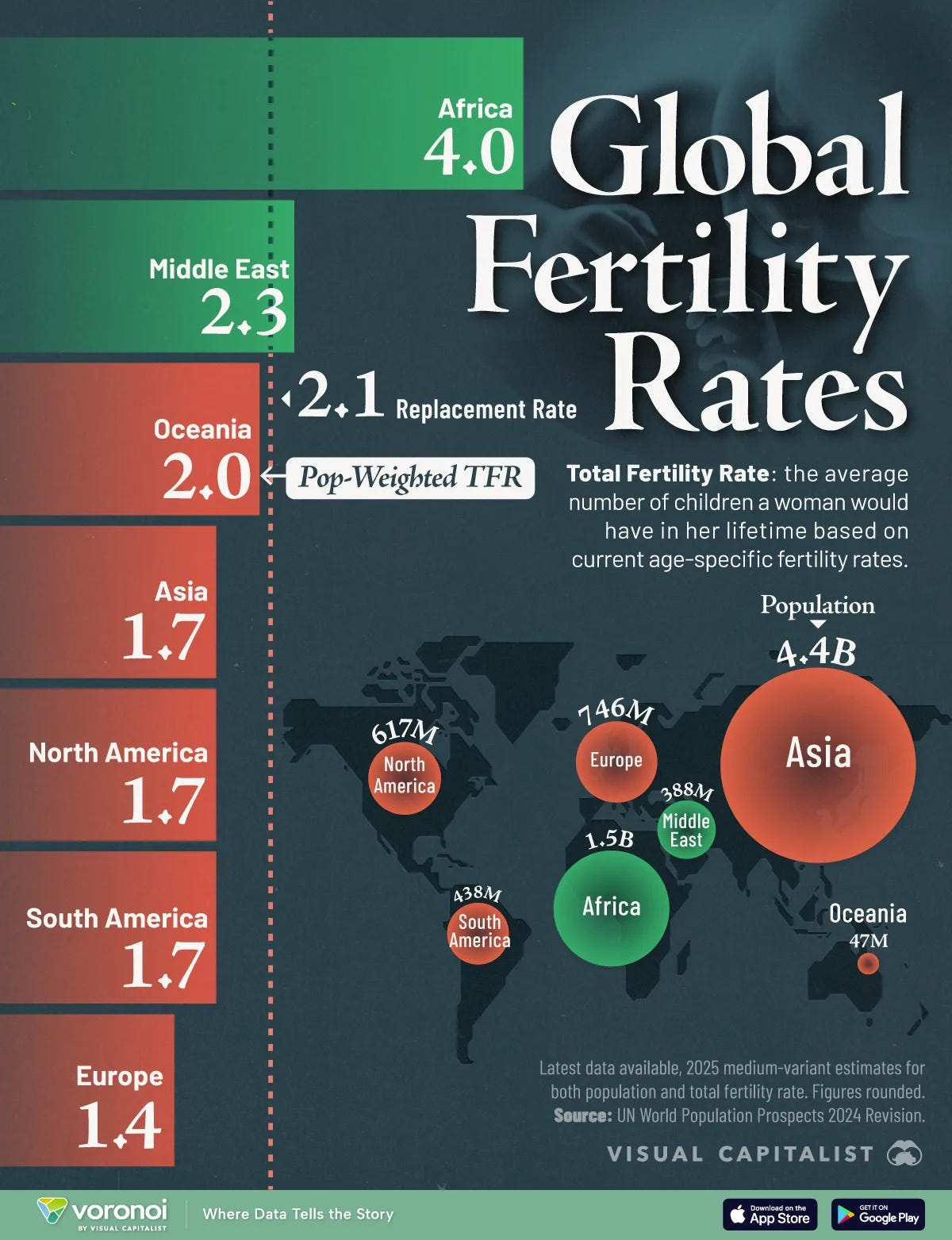
Projecting to 2050: Population stagnation has gone global
Sub-replacement fertility now predominates in all regions except the Middle East (which will no doubt there soon, as seen in Iran, Tunisia, and Turkey) and sub-Saharan Africa.
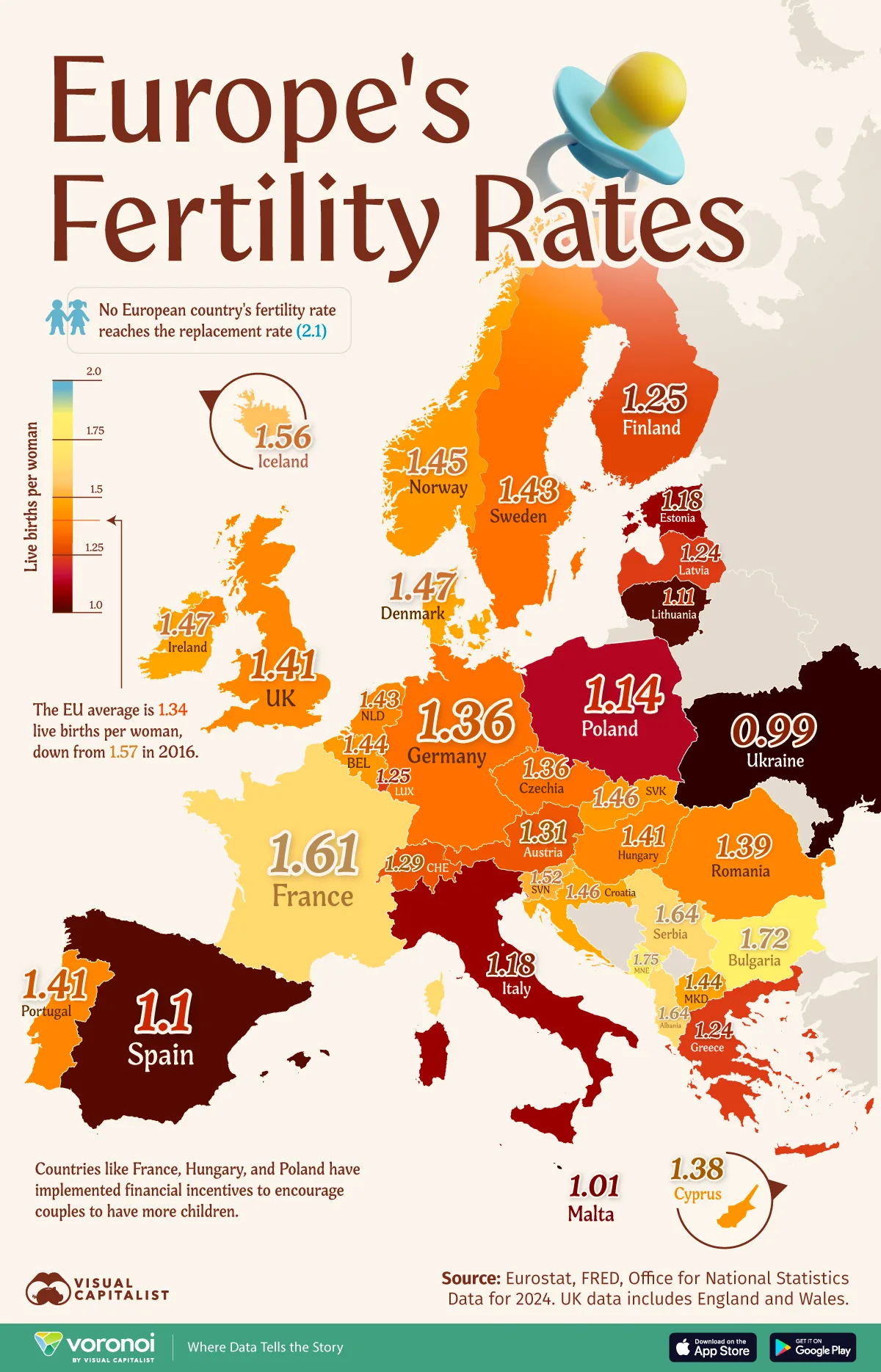
Europe faces a widespread fertility collapse almost on a par with East Asia. That means a vicious circle of demographic-fiscal dynamics as elected politicans try to sustain welfare states’ ballooning pension and healthcare spending on a collapsing base of workers. That will mean more economic stagnation, more geopolitical impotence, and more dependence on the U.S.A. Has Europe’s Century of Humiliation only just begun?
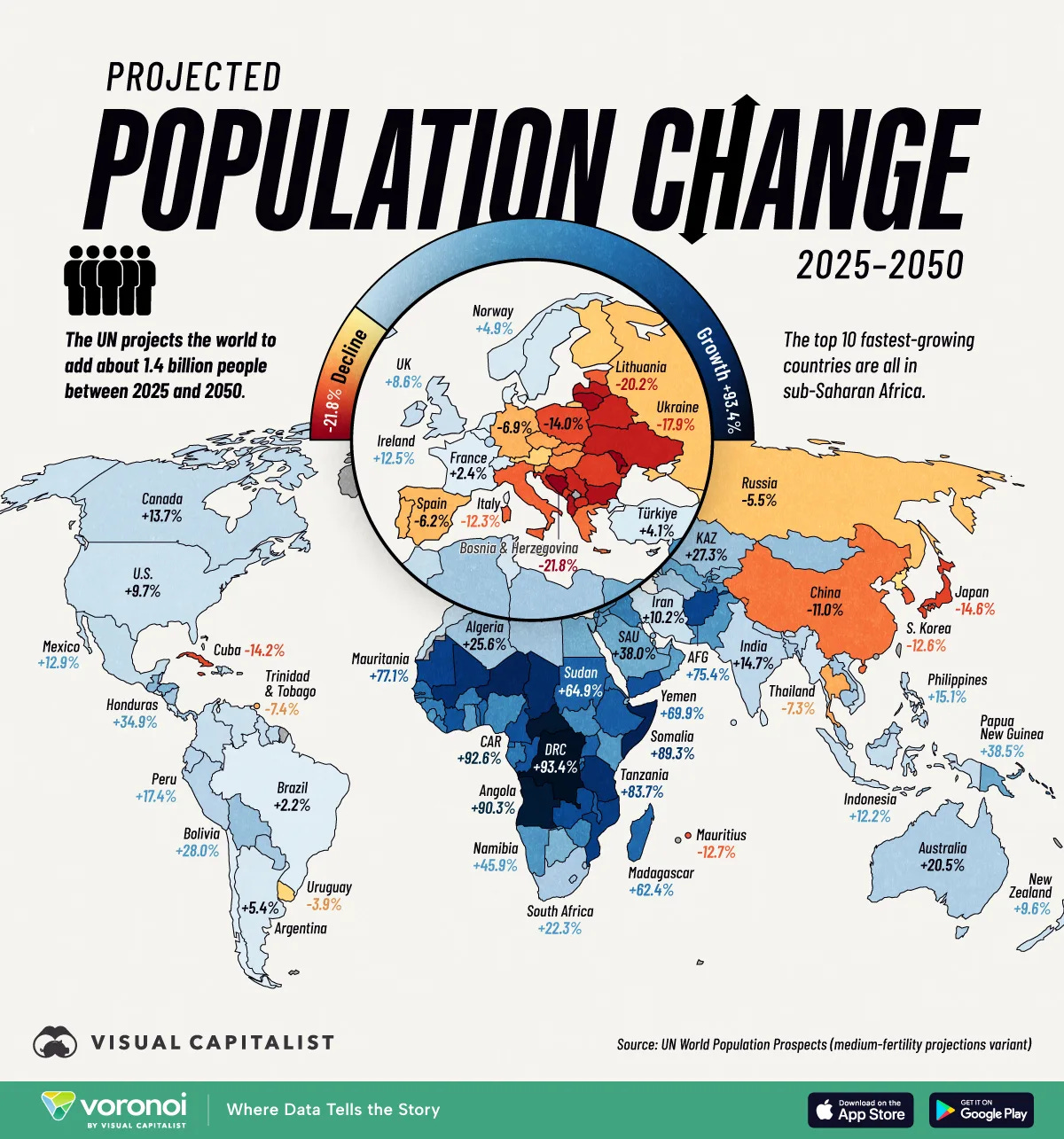
The following map was based on U.N. projections, which admittedly must be taken with a grain of salt. U.N. demographers for instance often assume fertility in sub-replacement countries like South Korea will revert to a replacement level of 2.1. But, as of today, there is no reason to think a return to replacement levels is likely. The map may well understate the degree of population decline, especially in Europe and East Asia.
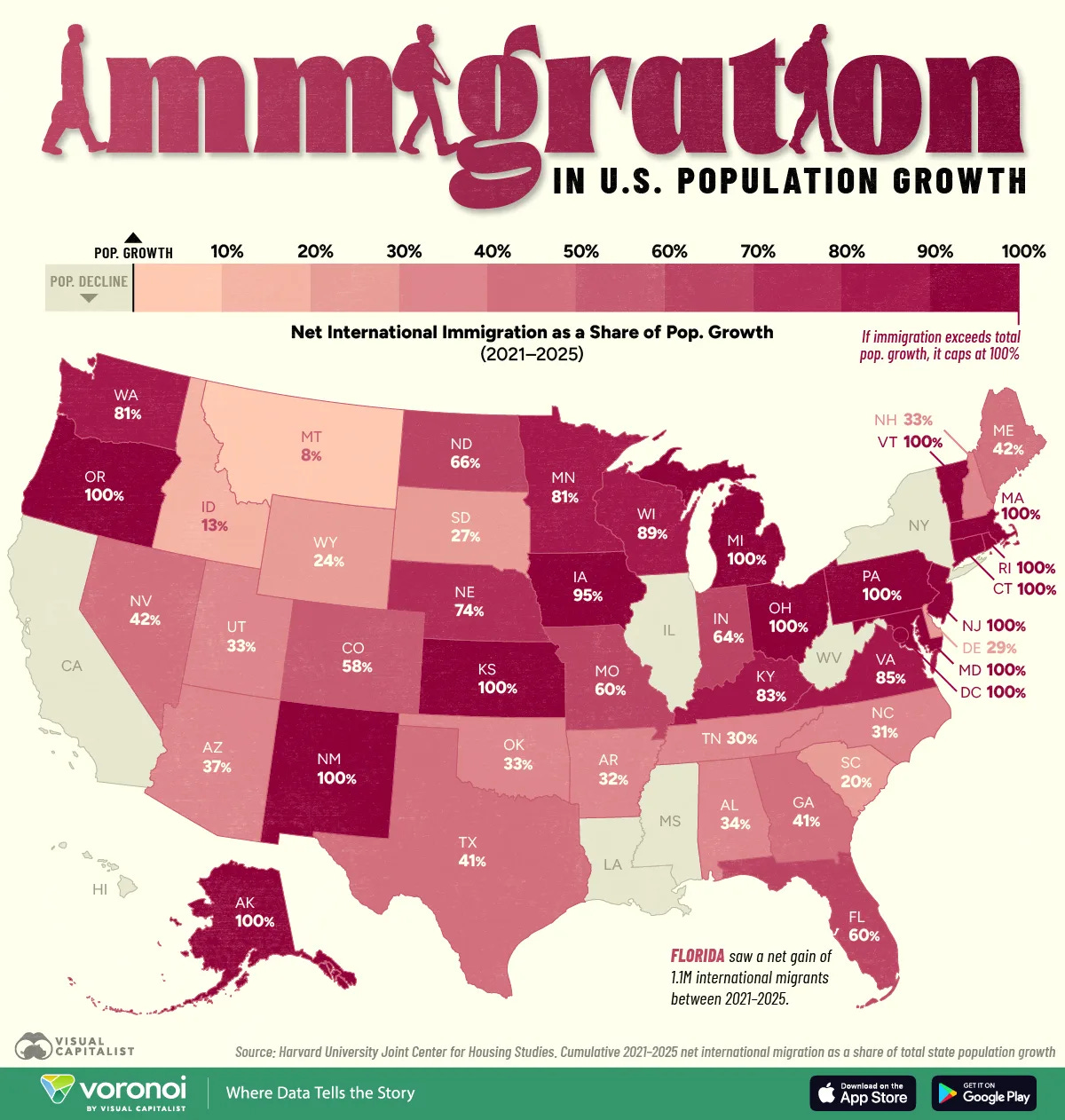
USA: Population growth has been driven by immigration

China’s demographic-fiscal Europeanization locks in
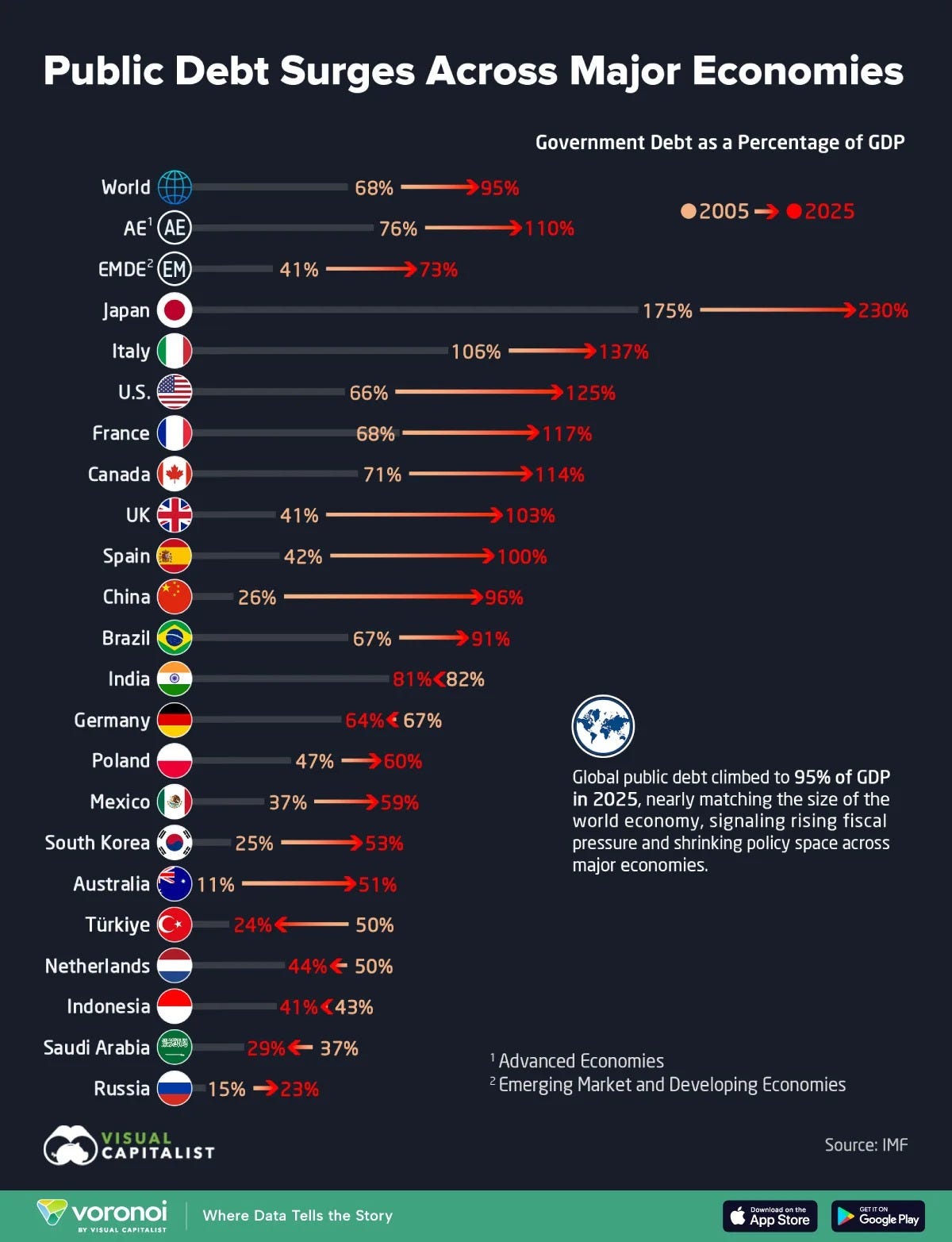
China’s economic growth is increasingly debt-driven. This may well get worse as the workforce steadily shrinks. Due the country’s less generous pension and healthcare systems for the elderly, China’s public finances likely won’t be hit as bad as western Europe or the U.S. by population aging. Still, the IMF estimates that aging will raise pension spending in China will rise by 10 percentage points of GDP between 2024 and 2050, a huge drag.
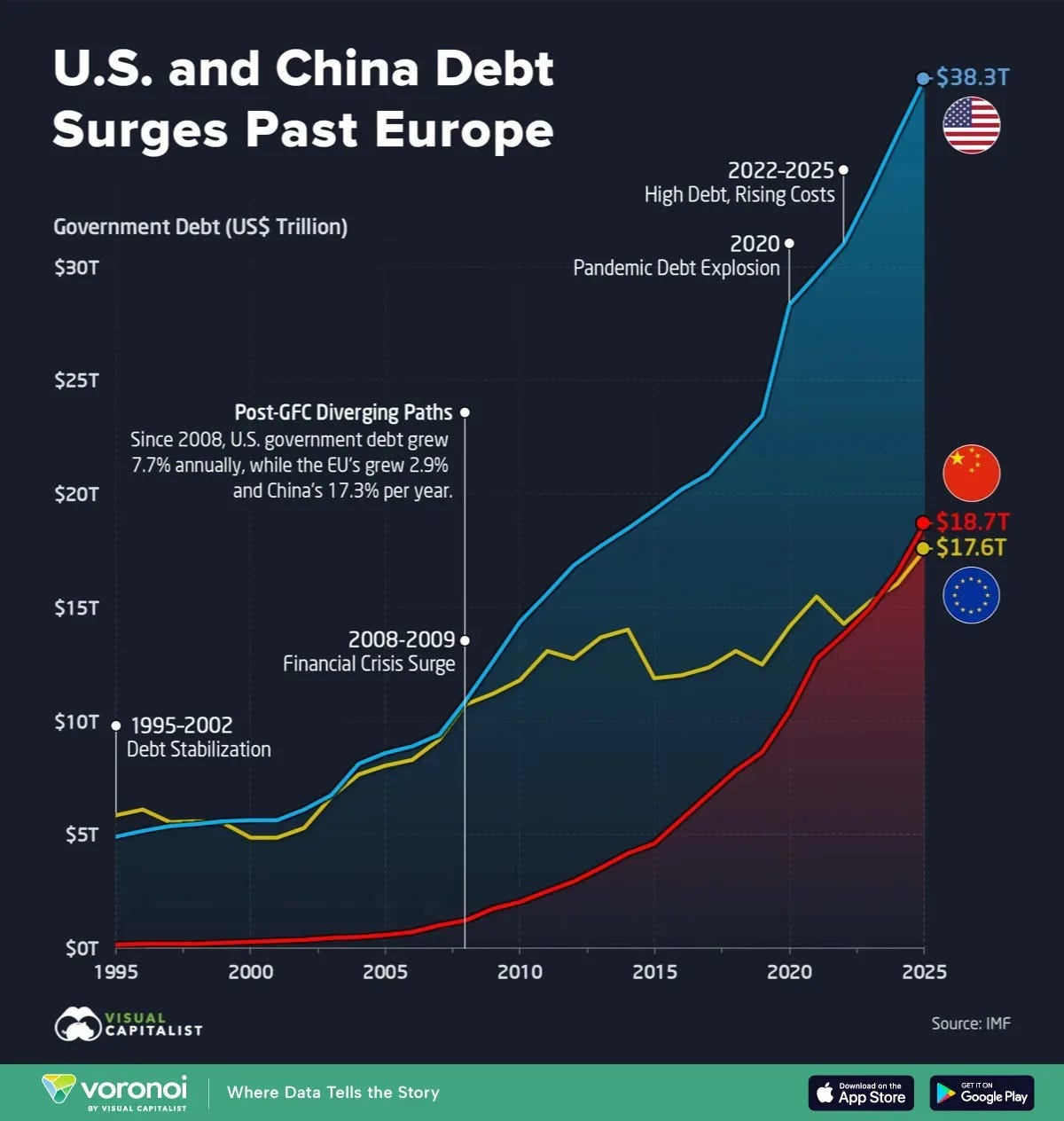
The rise of public debt across the developed world—mostly but not entirely due to demographic factors combined with welfare states—gives a sense of the spread of the Great Stagnation among productive countries. China is probably going to be hit by stagnation sooner and harder than we typically expect.