

Welcome to the latest issue of Repronews! Highlights from this week’s edition:
Repro/genetics
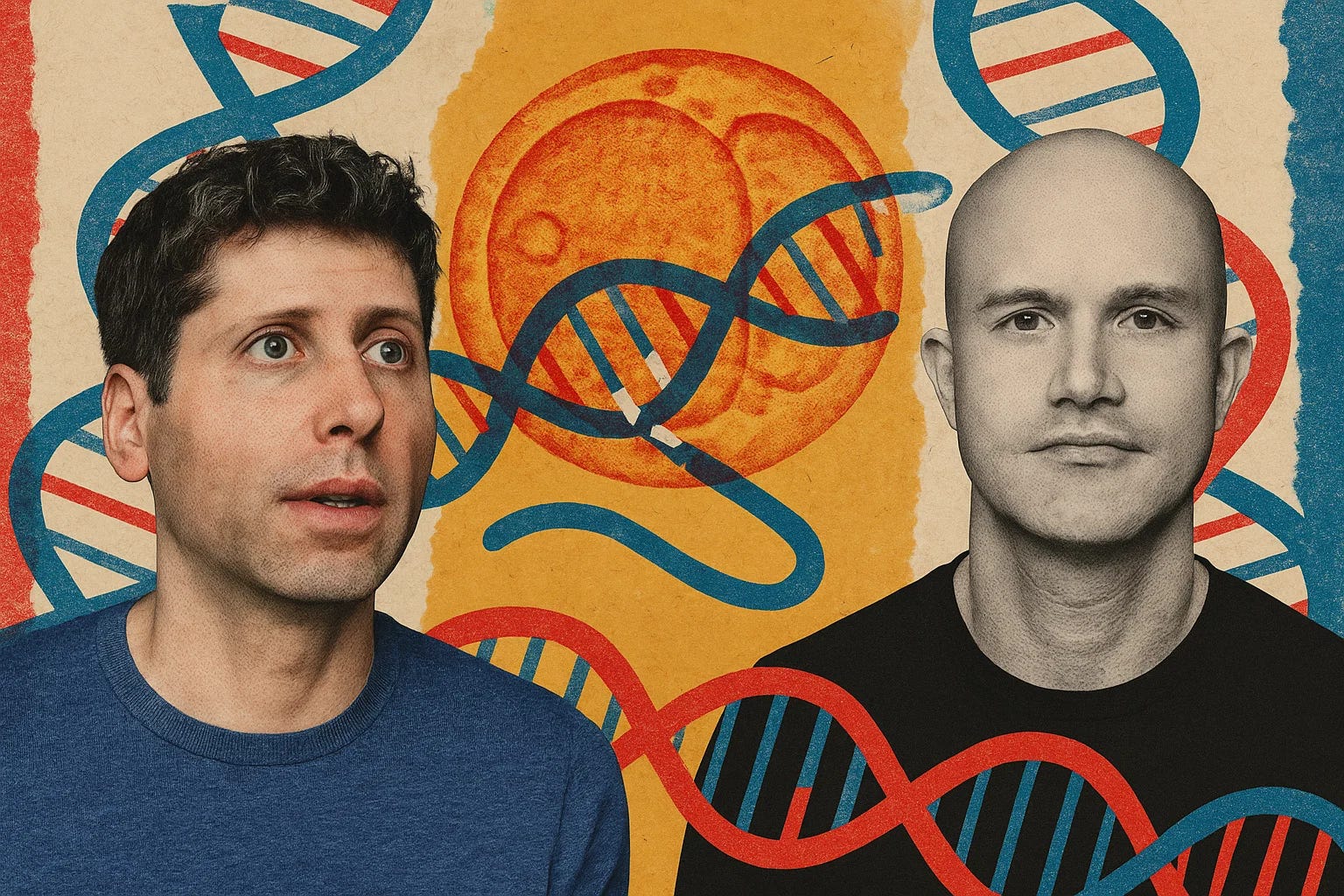
Tech billionaires Sam Altman and Brian Armstrong are backing Preventive, a startup aiming to use gene editing to eliminate hereditary diseases in embryos.
Danish sperm bank becomes first to set minimum IQ requirement for donors.
WHO releases first global guideline against infertility, calls for expanding access to fertility care like IVF.
Richard Hanania discusses studies suggesting IVF does not cause genetic damage in newborns.
Population Policies & Trends
China taxes condoms for first time in 30 years, removes VAT on childcare to fight collapsing fertility.
European Bank for Reconstruction and Development (EBRD) study says aging and shrinking workforces will lower living standards in Eastern Europe, with 0.4 percentage points less annual per capita growth to 2050, warns of looming fiscal-demographic death spiral.
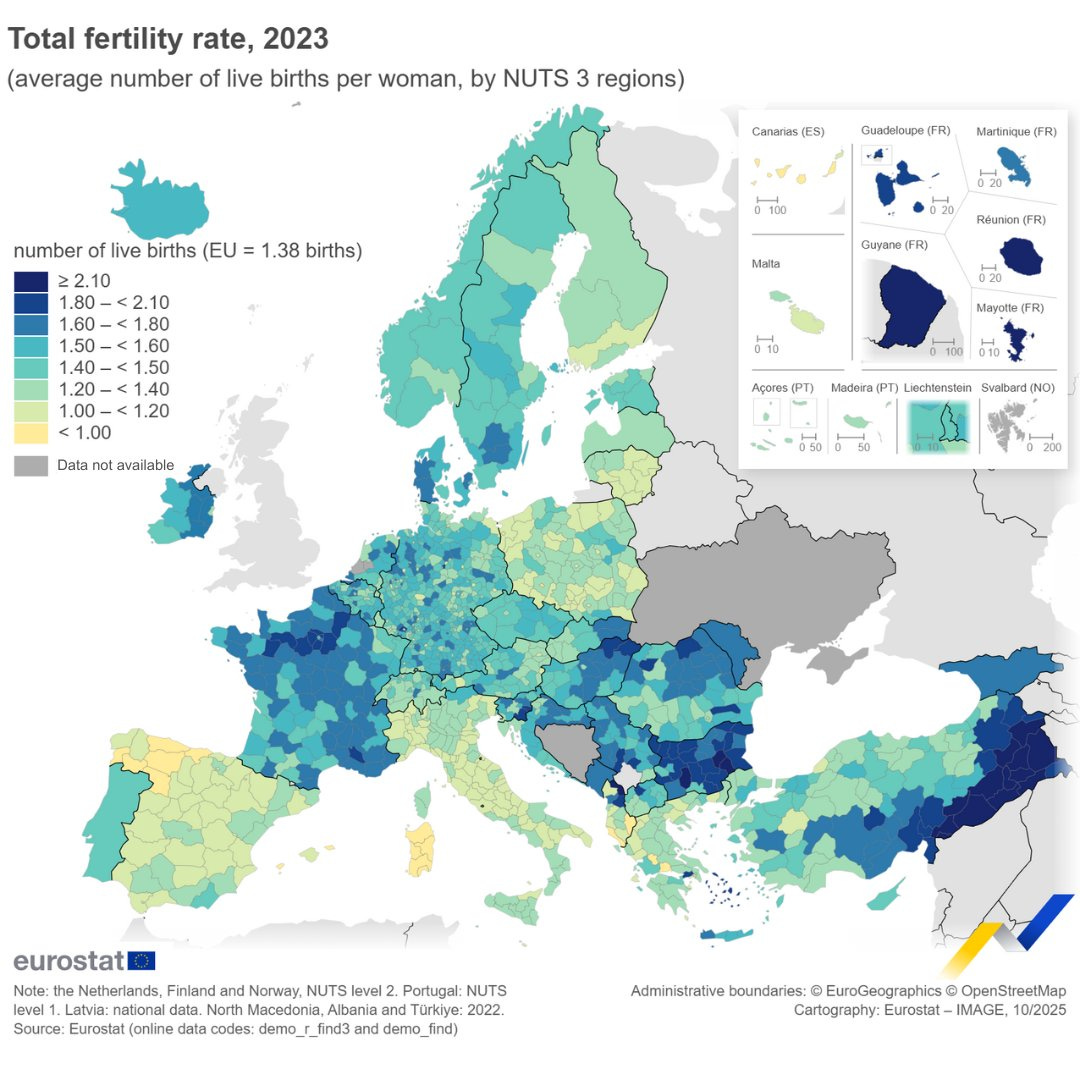
Map: Fertility rate by region across the EU, average fertility fell to 1.38 in 2023.
How Trump gave up on his free IVF promise to please the pro-life movement.
Genetic Studies
Study shows genetic correlations and underlying common intelligence factor between six cognitive-related traits.
Further Learning
Filipe Nobre Faria and Sandra Dzenis argue nations are “natural families” whose cohesion arises from “genetic relatedness, culturally evolved institutions, and intergroup competition.”
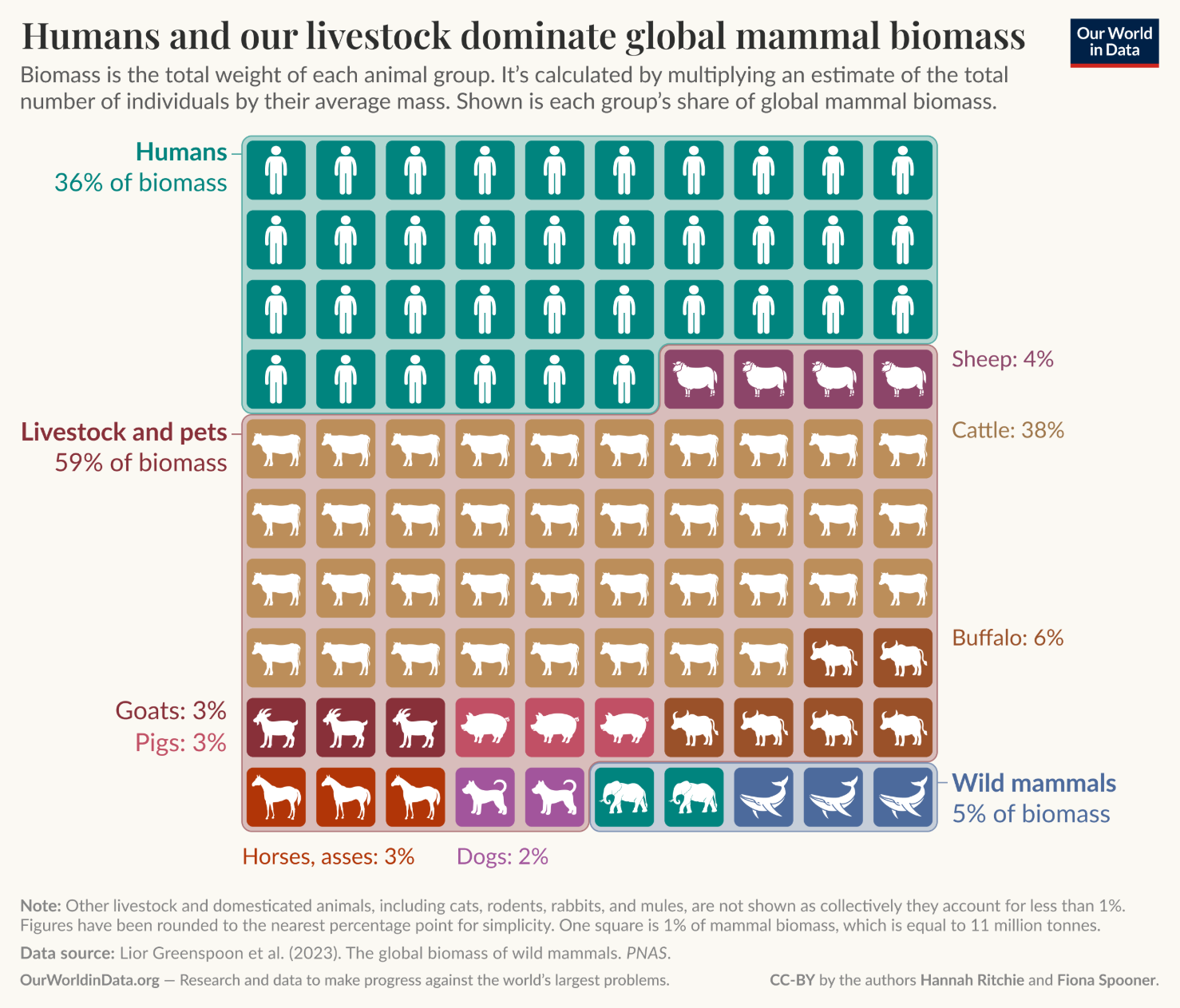
Graphics: Humans and livestock make up 95% of mammal biomass (wild animals only 5%).
Repro/genetics
Tech titans are trying to make a genetically engineered baby (Wall Street Journal)
OpenAI CEO Sam Altman and Coinbase Co-Founder and CEO Brian Armstrong each back Preventive, a startup working towards gene editing of embryos to prevent hereditary disease.
Preventive is searching for places to experiment where gene editing is allowed, including the United Arab Emirates (UAE).
The U.S. Food and Drug Administration (FDA) is prohibited by federal law from reviewing applications for human trials involving editing of embryos.
Armstrong argues that gene editing could reduce risk of heart disease, lower cholesterol, and prevent osteoporosis.
Armstrong posted that he is “[e]xcited to be an investor in Preventive! More than 300 million people globally live with genetic disease. … It is far easier to correct a smaller number of cells before disease progression occurs, such as in an embryo.”
Preventive has raised $30 million in investment to explore embryonic gene editing.
The company pledges not to avance to human trials “if safety cannot be established through extensive research.”
Earlier this year, Armstrong said that IVF clinics of the future will include a “Gattaca stack” of technologies including in vitro gametogenesis (IVG) to create ovules; preimplantation genetic testing; embryo editing for disease prevention or enhancement; and artificial wombs to eliminate the risks and burdens of pregnancy. He believes such technologies can address declining birth rates and “accelerate evolution.”
The Wall Street Journal also released a podcast discussing these issues: “The Secret Plan to Create Genetically Engineered Babies.”
“No more dumb sperm: Danish sperm bank sets IQ bar” (Danish Dream)
Donor Network, a Danish sperm bank, has become the first sperm bank in the world to require a minimum IQ of 85 from donors. About 18% of applicants fail the standard.
The bank also excludes people with a criminal record.
Donor Network provides clients with a 25-30 page profile for each donor, including psychometric information on cognitive abilities and personality.
Denmark is a major sperm exporter and Donor Network says the new screening standards aim to meet demanding global consumer expectations.
Screening of sperm donors for medical diseases is routine.
“WHO issues first global guideline on infertility” (WHO)
The WHO has released the first global guideline for the prevention, diagnosis, and treatment of infertility.
Infertility is estimated to affect 15% of people at some point during their lives.
The guideline calls for integration of fertility care into national health strategies, services and financing.
In some countries, a single round of IVF treatment can cost double the average annual household income.
The guideline advises on preventing lifestyle and environmental causes of infertility and urges a rights-based approach to foster reproductive agency.
“Should all parents consider embryo selection?” (Richard Hanania)
Considering that parents have “a moral obligation to do what we can to create the healthiest, smartest, and best-looking children possible,” blogger Richard Hanania examines the safety of IVF and embryo selection procedures.
While studies show IVF-conceived children are more likely to have health problems such as birth defects, much of the statistical variance is likely due to the older age of parents or their subfertility, rather than the procedure itself.
A Finnish study found people conceived through assisted reproduction had better long term educational and employment outcomes than the general population.
Hanania concludes that the peculiarities of the IVF procedure, such as massively reduced competition among sperm to fertilize the egg, have few negative effects.
“Overall, IVF lets people who are less healthy have more kids,” he writes. “Age and subfertility status are major contributors to negative outcomes, but the IVF process itself isn’t.”
More on repro/genetics:
“The world’s oldest baby: A 30-year old frozen embryo is now a child” (The Conversation / GLP)
“‘They treat men like vending machines’: Inside the hidden world of social media sperm selling” (The Guardian)
Berenice Cera argues that Argentina should have coverage for preimplantation genetic testing on grounds of human rights, scientific progress, and reproductive autonomy (Health & Human Rights)
“Embryo selection: A guide for the curious” (Quillette)
“My family’s embryo selection process”: Discussing use of Herasight to select an embryo for pregnancy (Anfei Larkin)
“Guidelines for management of male infertility published in Australia” (PET)
“‘The odd throuple’: Accuracy and authenticity in the IVF film Joy” (PET)
AquaWomb: “This machine could keep a baby alive outside the womb. How will the world decide to use it?” (The Guardian)
Population Policies & Trends
“China to tax condoms for first time in 30 years as demographic crisis deepens” (Euronews)
For the first time in 30 years, condoms will no longer be VAT-free in China, due to a new law aiming to boost birth rates.
Condoms will now be subject to a 13% tax levy.
Simultaneously, the government is removing VAT on childcare providers, elder-care institutions, and marriage-related services.
China is now in deep demographic crisis with a fertility rate of about 1 per woman, leading to a collapsing workforce.
Critics warn taxing condoms may contribute to the spread of sexually transmitted diseases.
According to a 2024 report by the YuWa Population Research Institute, the average cost of raising a child in China until the age of 18 is 538,000 yuan ($76,165), making it one of the most expensive countries for parents.
EBRD study: Aging populations will lead to lower living standards (Financial Times)
A study by the European Bank for Reconstruction and Development (EBRD) has found that, due to population aging and shrinking workforces, annual GDP per capita growth will fall almost 0.4 percentage points yearly in eastern Europe and the Caucasus between now and 2050.
“Emerging Europe is aging,” said EBRD Chief Economist Beata Javorcik. “Low fertility and a shrinking workforce will increasingly weigh on its growth prospects.”
Per capita growth will fall even harder in other countries due to demographic factors, namely South Korea (1.1 points yearly), Italy and Spain (over 0.7 points), and China and Japan (0.5-0.6 points).
An EBRD survey in Europe found that 42% of the over-65s want governments to prioritize public spending on healthcare and 25% on pensions.
“The time to act is now before demography closes off your options,” said Javorcik. “Because there may be this spiral that’s being created as voters get older, as leaders get older, they care more about issues of interest to the elderly, in particular pensions, and therefore it becomes harder to do any pension reforms.”
“‘The pro-life movement still has some real juice’: How Trump’s promise of free IVF fizzled” (Politico)
Social and religious conservatives have spent more than a year lobbying the Trump campaign and administration to not mandate insurance coverage for IVF.
These conservatives oppose IVF as akin to abortion, due to the creation (and often destruction) of surplus embryos.
While President Donald Trump has moved to lower the cost of some IVF medicines, these represent a small part of the cost of the procedure.
Social conservatives celebrated the fact Trump did not designate IVF an “essential health benefit” under the Affordable Care Act, which would require insurers to cover it.
“No one’s really talking about [Trump’s IVF initiative],” said Flory Wilson, CEO of the Reproductive & Maternal Health Compass. “It’s a nothingburger. I just don’t see how this is moving the needle in any meaningful way.”
During the 2024 campaign, Trump called himself “the father of IVF.”
Genetic Studies

“Multivariate genome-wide analysis: Shared genetic architecture and brain structural correlates of cognitive abilities” (Scientific Reports)
Researchers estimated potentially causal genetic variants associated with cognitive ability.
The study identified 3,842 genome-wide significant loci, including 275 new loci.
Analysis found a common cognitive factor representing shared genetic variance common to six cognition-related phenotypes—namely processing speed, educational attainment, executive function, memory performance, reaction time, and intelligence.
This common factor reflects fundamental neural processes—synaptic efficiency, neural connectivity, and neurotransmitter regulation—that enable cognitive performance across diverse tasks.
More on genetic studies:
“Within-family heritability estimates for behavioural and disease phenotypes from 500,000 sibling pairs of diverse ancestries” (medRxiv)
“Human genome structure mapped at base-pair resolution” (PET)
“AI model predicts rare, disease-causing genetic variants” (PET)
Further Learning
“Nations as natural families: From kin selection to multilevel selection” (Nations & Nationalism)
Political scientists Filipe Nobre Faria and Sandra Dzenis argue for the sociobiological view of nations as “natural families” or extended kin groups, not as purely artificial constructs.
The authors use multilevel selection theory—an evolutionary framework modeling competition and selection occurring at different levels in the hierarchy of life, e.g., both at the level of individuals and groups—to argue that “nations function as extended kin groups whose cohesion arises from genetic relatedness, culturally evolved institutions, and intergroup competition.”
“Traits that may appear individually costly—such as loyalty, altruism and conformity—can enhance the survival and competitiveness of groups. Multilevel selection does not replace kin selection [whereby genes shared by different family members are perpetuated through familial solidarity]; it extends it. Our multilevel selection approach shows how symbolic, kin-like identities enable group-level adaptations at the national scale.”
The authors argue their “biocultural” conception of the nation “helps bridge evolutionary reasoning with constructivist theories of nationhood.”
“Nations are not random products of history; they are recurring formations that emerge under specific evolutionary conditions. As humans spread into new environments, they tend to organise themselves into larger and more cohesive groups. Across time and place, we see nations arise, develop and sometimes collapse. This recurring pattern is driven by fundamental dynamics: cooperation, conflict, kinship, and cultural adaptation.”

More on human nature, evolution, and biotech:
Study of Swedish lottery winners finds wealth gains minimally decrease risk of criminal behavior (National Bureau of Economic Research)
Study finds CEOs with daughters on average lead companies with 9.1% higher corporate social responsibility (CSR) ratings (Journal of Financial Economics)
“Low cognitive ability estimates in developing countries: A statistical analysis of their credibility” (Human Evolution)
“National IQs: Measurement and defense” (OpenPsych)
“How ancient humans bred and traded the first domestic dogs” (Nature)
Perry Hendricks, “Organ markets are always the best option” (JoME)
Disclaimer: We cannot fact-check the linked-to stories and studies, nor do the views expressed necessarily reflect our own.