

Welcome to the latest issue of Repronews! Highlights from this week’s edition:
Repro/genetics
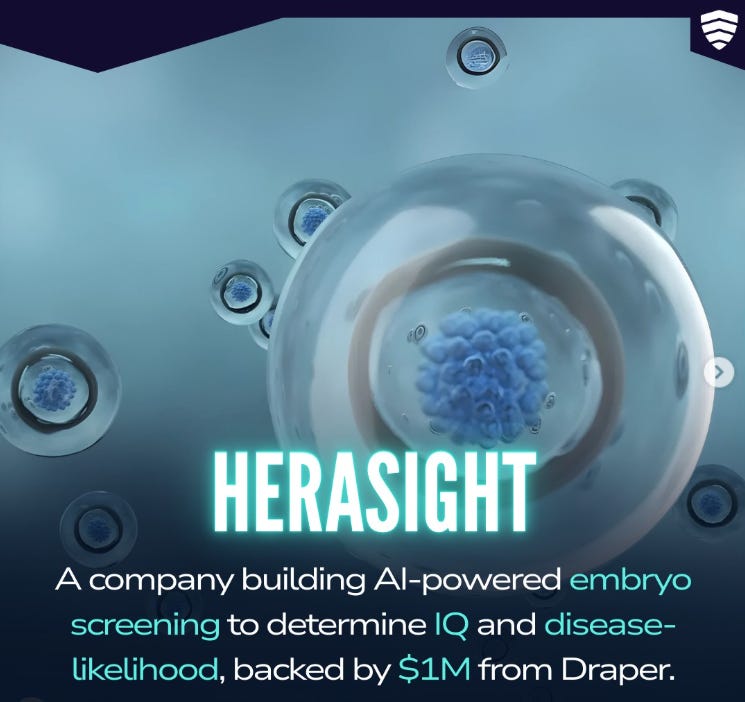
British couples are legally able to genetically select embryos for health and intelligence by using the services of U.S. firms.
Births to unmarried American women in their 40s has quadrupled since 1993, largely through IVF. Highly educated women are the most likely to use. IVF births have increased 50% over the past decade.
Over half of IVF fertility cycles in the U.S. now take place in clinics affiliated with private equity firms.
Population Policies & Trends
Gerontocracy: Vox discusses the rising numbers, power, and policy privileges of America’s elderly population.
Providing genetic services in wartime Ukraine.
Experiment with the Total Fertility Rate Simulator.
Genetic Studies
Variants of a single gene linked to over 90% of Alzheimer’s cases.
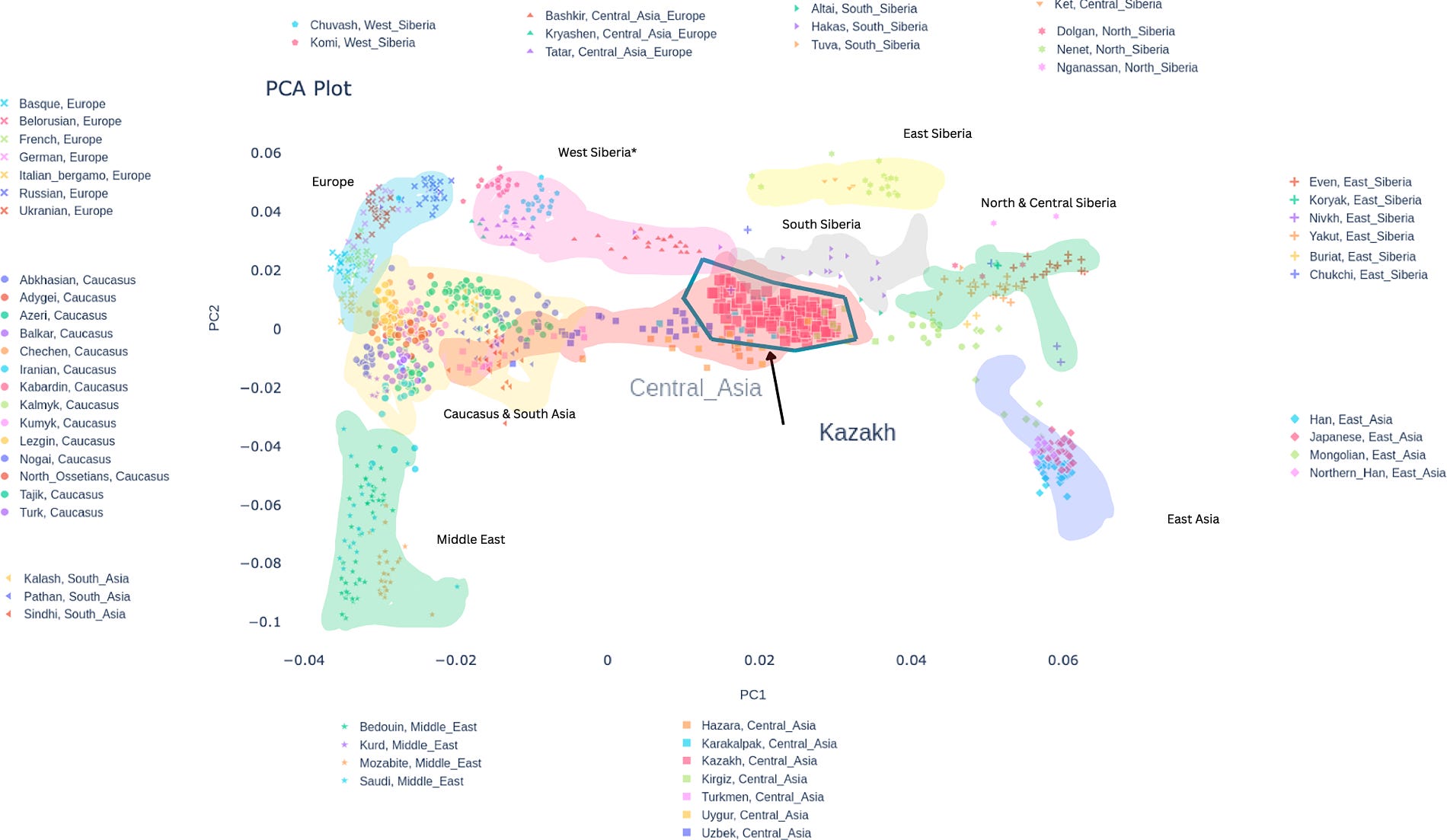
First comprehensive study of Kazakh genetics finds the population is a genetic bridge between East and West Eurasia. Many population-specific genetic health risks identified.
Further Learning
Personality and intelligence: Two meta-analyses find intelligence is linked to openness to experience and (modestly) lower neuroticism.
Repro/genetics
UK IVF couples use U.S. services to rank embryos based on potential IQ, height and health (Guardian)
Couples undergoing IVF in Britain are legally able to rank their embryos based on genetic predictions of IQ, height, and health by using U.S. firms.
While polygenic screening is not allowed in British clinics, patient can, under data protection laws, demand embryos’ genetic data and analyze these abroad.
The U.S. company Herasight reportedly charges $50,000 to assess an unlimited number of embryos. The Guardian notes: “There is no suggestion Herasight is in breach of any regulations.”
“People are willing to spend loads of money and heartache to give their kids slightly better lives after they’re born,” said one patient. “This seems the best bang for your buck; it’s less per year than private school.”
In Britain, tests performed on embryos are legally restricted to a list of serious health conditions, such as Huntington’s, sickle cell disease, or cystic fibrosis.
Herasight said: “We can confirm that Herasight has been working with parents from across the globe, including families who have undergone IVF treatment in the UK, by transforming routine PGT-A [preimplantation genetic testing for aneuploidy, an abnormal number of chromosomes] data that parents have legally obtained and provided to us. This data can be accessed by clients under applicable data protection laws in the UK, Europe, and the rest of the world.”
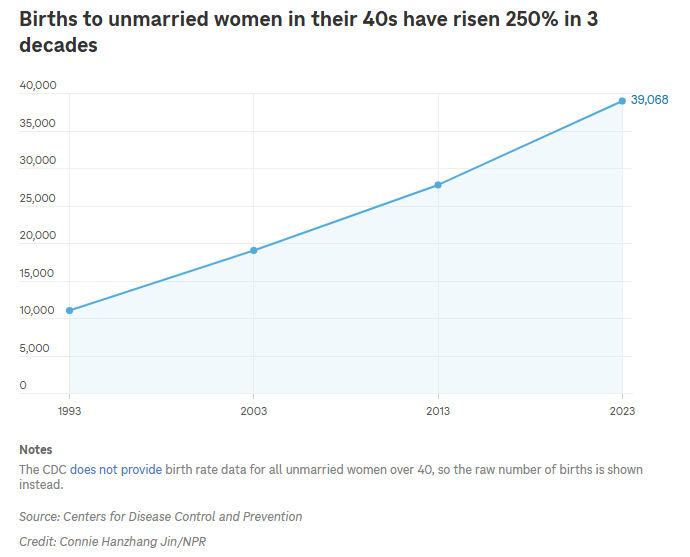
“How IVF has led to a record number of single moms in their 40s” (NPR)
IVF enables 2% of all births in the United States. That accounts for almost 100,000 births every year, up 50% from 10 years ago.
Women opting for IVF via sperm donor may choose based on factors such as race, health, height, and education. “I cared about some physical attributes to look like me,” said one IVF mother. “And I cared about family health history.”
The chances of conceiving a child with just one try of IVF are below 50% after a woman turns 35 and this probability decreases every year.
Each attempt at IVF typically costs $15,000-30,000 in the U.S.
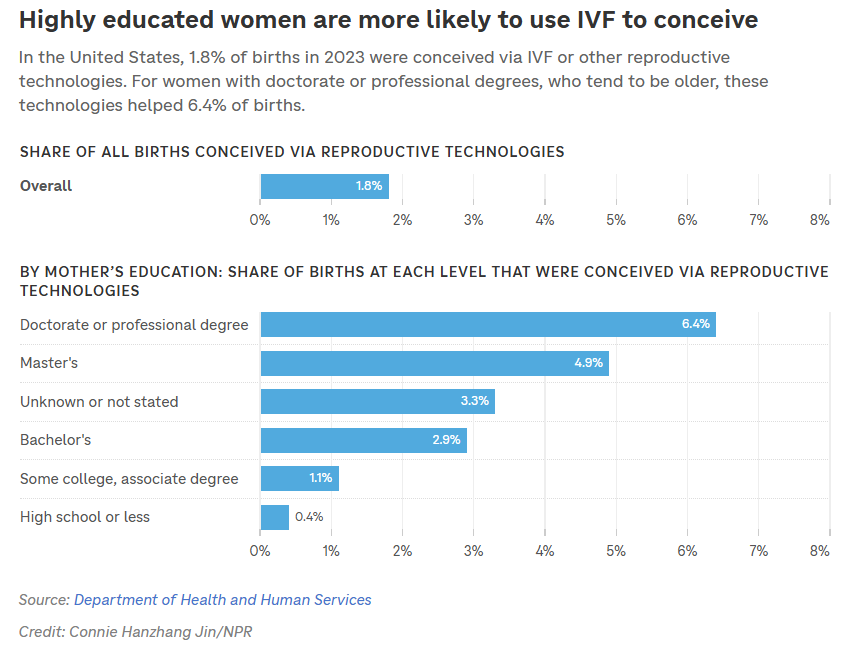
Women with higher education are the top users of IVF, enabling 6.4% of births among women with doctorate or professional degrees (as opposed to only 1.8% of births among the general population).
“Private equity firms now oversee over half of US IVF cycles” (Medical Xpress)
A study has found massive expansion in fertility clinics affiliated with private equity firms in the U.S. since 2013, rising from 3% to 32%.
In 2023, over half of IVF cycles in the U.S. were done at clinics affiliated with private equity firms.
Commenting on the tend, study lead James Dupree said: “It might be good for patients; it costs a lot of money to modernize IVF laboratory equipment and perform outreach to patients, and private equity firms can provide capital to hopefully improve quality and patient care.”
More on repro/genetics:
“Denmark launches national sperm donor register” (PET)
“Men’s Health Strategy for England includes infertility” (PET)
“Australia should (carefully) permit compensation for donors of surplus frozen eggs” (PET)
“Could egg defect breakthrough help stop the ‘horrible IVF rollercoaster’?” (Guardian)
“Engineered womb lining model opens a window into embryo implantation” (News Medical)
Population Policies & Trends
“Older voters are gaining power: Young people are paying the price” (Vox)
Vox argues that US public policy disfavors the young, offering relatively meager support to families with children while providing retirees with benefits.
The US is undergoing a demographic transition that will define much of American life in the 21st century: The drift towards gerontocracy—government of, by, and for the old—threatens the prosperity of America as a whole.
Between 1960 and 2024, the share of Americans over 65 doubled from 9% to 18%. Within a decade, America’s seniors will outnumber its children for the first time in history. By 2060, those over 65 are expected to make up about one quarter of the population.
The political implications are profound: seniors already accounted for 29% of the U.S. electorate in 2024. Older voters have always exerted disproportionate political influence due to their exceptionally high turnout rates.
Programs for the elderly will consume an ever-larger share of the federal budget , burdening younger Americans with higher tax rates or borrowing costs.
States have recently shifted tax burdens away from older generations and toward younger ones. Since 2022, Texas, Colorado, Iowa, and Pennsylvania have all slashed property taxes specifically for homeowners 65 or older. A slew of states have begun exempting retirement income from taxation. Missouri, Kansas, Nebraska, and West Virginia ended taxes on Social Security benefits, while Iowa abolished the taxation of all forms of retirement income—from 401(k) withdrawals to pension benefits—for residents over 55.
Federal rules already shield indigent retirees from income taxes.
The current rebellion against property taxation has been remarkably widespread. Texas has enacted especially steep cuts, reducing property taxes by $18 billion in 2023. Less sweeping reductions have passed in Georgia, North Dakota, Wyoming, Nebraska, and Idaho, among other places.Florida Governor Ron DeSantis has floated a plan to eliminate all property taxes in his state.
Some recent property tax cuts massively favor longtime homeowners over first-time buyers. In 2024, Georgia and Alabama both capped the amount that a homeowner’s assessed property value can rise in a given year.
According to a report from the Lincoln Institute of Land Policy, a young family purchasing a Miami townhouse in 2024 would owe three times as much in property taxes as an older neighbor occupying an identical unit since 2006.
In 2021, the United States spent just 0.6% of GDP on benefits for children and their parents—far below the OECD average of 2.3%.
President Joe Biden oversaw a permanent expansion in elder benefits. At the end of 2024, Congress passed a bill increasing Social Security payments to public-sector workers, at an annual cost of nearly $20 billion.
President Donald Trump’s GOP has largely embraced social spending that is explicitly earmarked for seniors. Republicans have forsworn cuts to Social Security and Medicare—and created new tax benefits for the old—combined with large spending cuts to programs that primarily benefit Americans under 65.
The GOP did finance tax cuts this year with large reductions in Medicaid spending, which will adversely impact many older Americans.
The vast majority of voters will remain under 65 for decades to come. The young could organize in defense of their own interests.
The Yes in My Backyard (YIMBY), composed largely of young renters, has agitated against zoning policies that privilege homeowners over tenants. YIMBYs’ fundamental aim—to make housing abundant and affordable—would benefit renters of all ages and make America as a whole more prosperous.
Vox concludes: “If younger voters stand up for their broader material interests in a similar fashion, America’s political economy just might age gracefully.”
“‘Heroes deserve to go home’: The need for genetics in wartime Ukraine” (PET)
A Kyiv genetics lab, Genecode Diagnostics, continues operating despite war damage, focusing on DNA identification amid severe resource constraints.
Genotyping is crucial to identify fallen soldiers. The lack of a centralized military DNA database makes identification slower, costlier, and difficult for families.
The lab handles ~400 human identification cases monthly, alongside prenatal, embryo, and cancer genomic tests, despite having far greater unused capacity.
War conditions have disrupted family structures and reproduction, with sharp rises in unregistered fathers, demand for paternity testing, and increased detection of severe genetic conditions via limited prenatal screening.
Total Fertility Rate Simulator (tfrsim.com)
The Fertility Policy Simulator lets you experiment with different policy mixes in the hope of achievement a replacement level fertility rate (2.1 per woman).
Policy options cover fertility policies, “illiberal” policies like abortion bans or a childlessness tax, welfare, taxes, and immigration.


More on population policies and trends:
“Estonia is linking a super genome database to patient records. Is it safe?” (Politico)
Genetic Studies
“Just one gene may be responsible for over 90% of Alzheimer’s cases” (Science Alert)
A study by University College London (UCL) researchers has found 9 out 10 Alzheimer’s cases could be driven by specific variations in a single gene.
Based on four genetic datasets covering almost 470,000 people, the researchers identified variations in the APOE gene as implicated in most Alzheimer’s cases.
“Without the contributions of APOE ε3 and ε4 [variants], most Alzheimer’s disease cases would not occur, irrespective of what other factors are inherited or experienced by carriers of these variants throughout life,” said genetic epidemiologist Dylan Williams.
Individuals’ Alzheimer’s risk significantly depend on which two variants of the APOE gene they have received from their mother and father.
Alzheimer’s risk is also increased by factors such as obesity, social isolation, and lack of sleep.
“First comprehensive Great Steppe genomic dataset uncovers unique variants” (Medical Xpress)
Researchers from Nazarbayev University’s National Laboratory have created the first large-scale, high-quality genotyping dataset of healthy Kazakh individuals.
The study presents a detailed analysis of genetic diversity across 224 participants representing Kazakhstan’s major regions and tribal groups.
Central Asian populations remain largely underrepresented in global genome databases.
Kazakhs are revealed to be a genetic bridge between East and West Eurasia. “Our goal was to build a genomic foundation for precision medicine and population studies in Kazakhstan,” says Professor Ulykbek Kairov, the project’s principal investigator. “The genetic landscape of Kazakhs reflects centuries of interaction along the Silk Road, and now we have data to explore that scientifically.”
The study identifies 74 population-specific variants with potential biomedical implications, particularly in genes linked to metabolism and drug response, including associations with alcohol metabolism, aerodigestive cancers, lipid metabolism (nomadic Kazakh populations had a historically high-fat diet), glucose regulation, and type 2 diabetes risk.
The research found low levels of inbreeding and exceptionally low homozygosity, confirming cultural practices that discourage consanguineous marriages.
All genotyping data are publicly available through the European Variation Archive (accession PRJEB89820) and associated code is accessible on GitHub.
“This dataset positions Kazakhstan within the global genomic map,” notes Dr. Dos Sarbassov, co-author and project supervisor. “It will help develop population-specific health care solutions and strengthen international cooperation in genomics.”
More on genetic studies:
“More than two-thirds of the genetic risk across major mental health conditions appears to be shared,” according study of 1 million people (The Hindu)
“Schizophrenia and osteoporosis share 195 genetic loci, highlighting unexpected biological bridges between brain and bone” (Medical Xpress)
“Brazil’s genetic treasure trove: Supercentenarians reveal secrets of extreme human longevity” (Medical Xpress)
“How a rare genetic variant protects some people from developing blood cancers” (Medical Xpress)
“Genomic map linking complex trait genes” (PET)
“Cognitive evolution in Western Europe” (Aporia)
“Non-coding gene discovered to be a cause of blindness” (PET)
Further Learning
“Prsonality and intelliegence are more closely linked than we thought” (Nature-Nurture-Nietzsche)
Two new metanalyses (studies synthesizing multiple studies) explore the relationship between intelligence and personality.
Psychologists have traditionally thought intelligence and personality are largely unrelated. Among the Big Five personality traits (neuroticism, extraversion, openness to experience, agreeableness, and conscientiousness), intelligence had only been linked to openness to experience.
One study synthesizes 200 studies covering more than 162,000 people, while the other synthesizes 1,235 studies covering more than two million people from more than fifty nations.
Both studies examined personality-intelligence links not just at the broad trait level, but also at lower levels of the personality hierarchy, i.e. sub-traits. Both studies explore crystallized intelligence (knowledge and skills) and fluid intelligence (ability to process information quickly and solve novel problems, independent of acquired knowledge).
Openness and neuroticism were found to be the two traits most closely linked to intelligence. Openness was positively correlated with intelligence, while neuroticism was slightly negatively correlated with intelligence.
Both studies concluded that personality-intelligence links are much stronger at the sub-trait level than the trait level.
Crystallized intelligence was found to be more strongly linked to personality than is fluid intelligence.
Perhaps intelligence helps cultivate openness, and especially its intellectual facets. Smarter people are better equipped to undertake cognitively demanding tasks and obtain more benefits from doing so. As a result, they enjoy these tasks more and develop a stronger interest in them. Smarter people are also better equipped to entertain and evaluate unconventional ideas, and thus may come to enjoy those more too.
Depression and anxiety were negatively correlated with intelligence in both studies.
Intelligence is a useful resource for dealing with the challenges of everyday life, enabling better occupational and financial outcomes, which may help insulate people from the kind of stressful emotions associated with neuroticism.
Steve Stewart-Williams concludes: “[P]ersonality and intelligence are more intertwined than once believed. The key to unlocking their relationship is to look deeper than broad traits, into the rich and nuanced world of personality facets.”
More on human nature, evolution, and biotech:
“The four principles in Islamic and Western medical ethics” (New Bioethics)
Disclaimer: We cannot fact-check the linked-to stories and studies, nor do the views expressed necessarily reflect our own.