


Welcome to the latest issue of Repronews! Highlights from this week’s edition:
Repro/genetics
Olympic skater and IVF-baby Alysa Liu wins gold in Milan
Preimplantation genetic testing (PGT) market forecast to grow 10.5% annually to $1.13 billion by 2030
Alev Scott’s book Cash Cow reports on fertility industry in Europe, including dubious fertility tourism in Northern Cyprus
Germany debates decriminalizing abortion
Population Policies & Trends
Discounted IVF drugs now being sold on TrumpRx website
France’s fertility plan includes sending letter to all 29-year-olds regarding family plans, reminding them of free fertility services such as egg-freezing
The New York Times reports that U.S. fertility is falling massively, but mainly due to lower teen and working-class pregnancies
Small Hokkaido town offers big baby bonus—and why it’s unlikely to work
Genetic Studies
European ancestry is correlated with higher socioeconomic status across the Americas
Further Learning
Repro/genetics
IVF baby Alysa Liu was born via surrogacy (Men’s Journal)
20-year-old Alysa Liu has won the winter Olympic gold medal for figure skating in Milan.
Her father, Arthur Liu, was a single dad who used a surrogate and anonymous egg donors to have his five children.
Arthur chose white (Caucasian) egg donors because he “felt his children would benefit from a diverse gene pool” and multicultural upbringing.
Alysa later asked her father: “Why do I look different? Why don’t I look Chinese?”
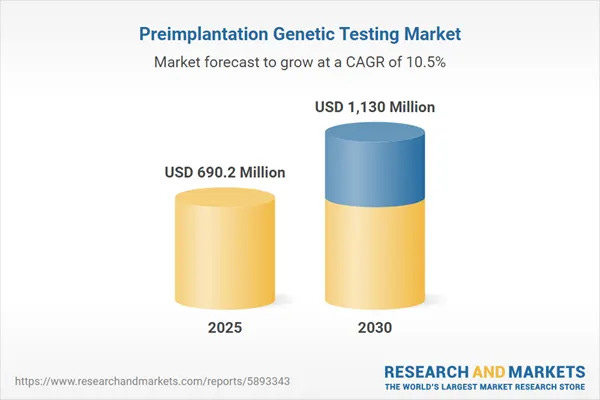
“Preimplantation genetic testing market research and global forecast report 2025-2030” (Research & Markets)
The global preimplantation genetic testing (PGT) market is projected to grow from $690.2 million in 2025 to $1.13 billion by 2030, with a compound annual growth rate (CAGR) of 10.5%.
Key growth drivers include rising genetic disorder prevalence, increased awareness of early genetic diagnosis, and widespread IVF procedures.
Demand is supported by advances in next-generation sequencing (NGS) and polymerase chain reaction (PCR) that enhance testing accuracy and efficiency.
High costs and ethical challenges remain obstacles to growth.
The U.S. market expects the fastest growth rate, driven by advanced healthcare infrastructure and supportive policies.
Trends toward delayed pregnancies and rising risk of chromosomal abnormalities in embryos are contributing to market expansion.
Detection of aneuploidy (an abnormal number of chromosomes) is expected to grow at the highest rate.
Growing awareness of genetic screening benefits and the rising adoption of assisted reproductive technologies are contributing to strong growth.

“New book highlights fertility tourism in North Cyprus” (PET)
Journalist Alev Scott has written a book on the fertility industry: Cash Cow: How the maternal body became a global commodity – and the hidden costs for women.
The book investigates the murkier aspects of cross-border reproduction in Europe, including questionable practices in egg donation and surrogacy.
An excerpt of the book published in the London Times highlights UK couples’ using fertility services in Northern Cyprus (occupied by Turkey) to engage in sex selection of their future children.
Reproductive self-determination and regulation of abortion in Germany: Current controversies and developments” (JoME)
Abortion is still formally illegal in Germany due to Catholic and Kantian emphasis on embryonic human dignity.
However, there is no punishment for abortion performed within the first 12 weeks of pregnancy.
A Federal Commission on Reproductive Self-Determination and Reproductive Medicine, appointed in 2023, recommends decriminalizing early-stage abortion.
Germany also has highly restrictive laws on stem-cell research.
More on repro/genetics:
Podcast: “Polygenic risk, polygenic scores, polygenic indices: What are they? What should be done with them?” (PET)
Population Policies & Trends
“Discounted IVF drugs now available via TrumpRx website” (PET)
U.S. President Donald Trump’s drug-discount programme TrumpRx is now live, offering reductions on some widely-used IVF drugs.
The website, launched on 5 February, offers discounts on 43 drugs, including those for weight loss, diabetes, menopause, and fertility treatment.
Four IVF medications are listed on the site. The U.S. Centres for Medicare and Medical Services estimates that fertility patients could save up to $2200 per cycle.
“For very niche populations and very specific medication, at least in the case of infertility, it looks like this might be a good deal,” said Dr. Rena Conti, associate professor of markets, public policy, and law at Boston University’s Questrom School of Business.
A single IVF cycle can cost as much as $30,000 in the U.S. and fertility treatment is often not covered by medical insurance.
“We are pleased to see fertility medications included in the TrumpRx portal,” said Sean Tipton, chief advocacy and policy officer, American Society for Reproductive Medicine (ASRM). “This move alone does not make IVF attainable for most patients. ASRM urges President Trump and Congress to move beyond incremental steps and focus on solutions that truly make fertility care accessible and affordable for all patients who need it.”
“French 29-year-olds urged to start families” (PET)
The French government is sending a letter to all 29-year-olds in the country to encourage them to think about when they will have children.
In response to falling birth rates, President Emmanuel Macron has approved the implementation of a new 16-measure fertility plan by the Ministry of Health.
“Fertility is a shared responsibility between women and men,” said Health Minister Stéphanie Rist. She added that the government’s role is “not to dictate whether or not to have children,” but to remind people of their options.
Scientifically validated information about reproductive and sexual health will be available through a new national reference portal called Ma Fertilité.
The letter highlights the availability of state-funded egg-freezing for 29- to 37-year-olds. To meet rising demand, the plan includes measures to open 30 additional egg-freezing centres by 2028 and improve regional access.
The plan will also addresses the surge in demand for donor gametes following the enactment of the 2021 bioethics law granting single French women and those in same-sex partnerships access to state-funded IVF.
Treatments using donated sperm have increased 8.5-fold compared to the period before the legislation was passed.
The plan also includes funding to continue research into treatments for
endometriosis and strengthening care for polycystic ovarian syndrome, which can affect fertility.
France’s birth rate has fallen below the death rate
France’s 2025 fertility rate of 1.56 children per woman, on average, is one of the highest in Europe. In 2024, the European average was 1.4, and the UK’s 1.41.
U.S. birthrate is plunging: Some say it’s a good thing (New York Times)
The U.S. birthrate has fallen over 25% since 2007, driven largely by declines among teenagers and women in their early 20s, especially those without college degrees.
Many young women from working-class backgrounds are delaying or avoiding children to achieve financial stability and avoid the stress and hardship they saw in their own childhoods.
Teen birthrates are down 70% and unmarried birthrates down 30%, which some researchers see as a success story of greater control and planning rather than social decline.
Changing adulthood patterns—later marriage (around 29–30), increased female employment, housing costs, better contraception, and shifting relationship dynamics—contribute to delayed family formation.
Most American women still want about two children, but the U.S. fertility rate has fallen to 1.6.
Small Hokkaido town announces prefecture’s biggest baby bonus (population.news)
Yoichi Town in Hokkaido will double its birth bonuses in FY2026, paying ~$6,600 from the third child onward—the highest municipal birth bonus in the prefecture—amid Japan’s record-low fertility (1.15 nationally, 1.01 in Hokkaido).
Research covering all 1,741 Japanese municipalities finds huge variation in “desired birth rates” and shows that sustained child welfare spending—not one-time cash bonuses—is the strongest predictor of higher fertility.
Successful cases like Akashi and Nagareyama municipalities boosted fertility through ongoing investments (free childcare, medical care, school meals, commuter-friendly daycare systems), not lump-sum payments.
Structural factors such as commuting time, housing constraints, childcare access, and community networks matter, and are largely shaped at the municipal level.
Yoichi faces severe demographic headwinds (aging population, shrinking base of women 20–39).
Genetic Studies
“Biogeographic ancestry and socioeconomic status: A meta-analysis of epidemiological findings” (Evolutionary Psychology Science)
This study examines correlations between biogeographic ancestry (African, European, and Amerindian admixture proportions) and socioeconomic status (SES) in the Americas.
Across aggregated samples, European ancestry is positively correlated with SES (about r = +0.16), while African and Amerindian ancestry are negatively correlated with SES (about r = −0.13 and r = −0.11, respectively).
Moderator analyses (U.S. vs. non-U.S., local vs. multi-region samples, self-identified race/ethnicity subgroups, composite vs single SES measures…) generally do not eliminate the pattern.
The authors argue that omitting genetic-ancestry measures can create omitted-variable bias in social-science models of inequality, while emphasizing that correlations do not by themselves identify mechanisms (e.g., cultural transmission, discrimination, genetics).
More on genetic studies:
“NHS launches national cancer gene register” (PET)
556 genes asociated with uterine receptivity, may explain why embryo implantation fails in some fertility patients (PET)
“First cell-level gene maps created for Alzheimer’s disease” (PET)
“Continental genetic ancestries as predictors of socioeconomic and cognitive variation across the Americas” (OSF)
Further Learning
More on human nature, evolution, and biotech:
Gennady McCracker, “Moral enhancement increases freedom” (JoME)
“Some genes predate the last universal common ancestor of all life” (PET)
“China leds Asia in its slow embrace of genetically modified crops (GLP/World Grain)
Disclaimer: We cannot fact-check the linked-to stories and studies, nor do the views expressed necessarily reflect our own.